
In short
Amaranth flour for baby food is Peruvian kiwicha (amaranth) flour that the pack labels suitable from six months. It’s a plain, single-ingredient grain flour, naturally gluten free, with very fine seeds that cook into a smooth porridge. As with any first food, check with your pediatrician before giving new foods to babies.
What is kiwicha flour?
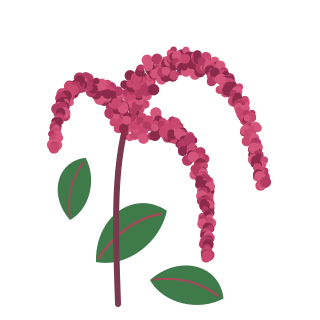
Kiwicha is the Andean name for amaranth (Amaranthus caudatus), a tiny seed eaten in Peru for centuries. Milled into flour, it’s naturally gluten free, and because its seeds are only about a millimeter across, it cooks into a genuinely smooth porridge with no grittiness.
Andean households have cooked kiwicha into porridge for centuries.
What makes this flour different
The age statement
“Suitable from 6 months” is printed on the pack, and few grain flours carry an age statement. It’s the producer’s statement, so check with your pediatrician before giving new foods to babies.
Two sizes
250 g and 500 g. Amaranth flour goes rancid within about six months, so the smaller bag usually makes sense if you only use a spoonful at a time.
Single ingredient
Kiwicha flour. No added sugar, no milk powder, no flavoring.
Taste profile
Very mild, faintly nutty and slightly sweet: one of the gentlest grain flavors there is.
How to use it
For babies (from 6 months, as labeled)
Check with your pediatrician before giving new foods to babies, and follow their advice and your country’s infant feeding guidance on how to prepare it. Kiwicha flour must always be cooked: simmer it, stirring constantly, until smooth, then let it cool to lukewarm.
For everyone else
| Use | How |
|---|---|
| Family porridge | 30 g in 200 ml milk |
| Baking | 20–30% of the flour weight |
| Smoothies | 10 g |
| Soup thickener | 1 tbsp |
| Pancakes | 25% of the flour |
Where it comes from
Peru. Kiwicha grows across the Andean valleys and has been grown and eaten in the Andes for thousands of years.
Who it’s for
A good fit if you want a plain, single-ingredient kiwicha flour labeled from 6 months, or a mild amaranth flour for family porridge and baking.
Look elsewhere if your pediatrician has recommended a fortified infant cereal. This is a plain grain flour, not a formulated infant food.
Important: always follow your pediatrician’s advice and your country’s infant feeding guidance. Introduce one new food at a time and watch for reactions. Never add sugar, salt or honey to food for a baby under 12 months.
Nutrition
Reference values for amaranth flour, per 100 g. The label on the pack may differ slightly.
| Energy | About 370 kcal |
|---|---|
| Protein | About 14 g |
| Carbohydrate | About 65 g |
| of which fiber | About 7 g |
| Fat | About 7 g |
| Iron | About 7 mg |
| Calcium | About 160 mg |
| Magnesium | About 250 mg |
| Lysine | About 0.75 g |
| Gluten | None |
Specifications
| Botanical name | Amaranthus caudatus |
|---|---|
| Ingredients | Kiwicha flour |
| Suitable from | 6 months (as stated on the pack) |
| Gluten | None |
| Added sugar | None |
| Sizes | 250 g, 500 g |
| Origin | Peru |
Amaranth compared with other grain cereals
| Amaranth | Rice cereal | Oat cereal | Wheat cereal | |
|---|---|---|---|---|
| Gluten | None | None | None if certified gluten free | Yes |
| Texture when cooked | Very smooth | Smooth | Slightly textured | Smooth |
Storage
Keep it airtight, cool and dry. Amaranth flour goes rancid within about six months. If you’re buying it for a baby, choose the smaller size and keep it sealed.
Questions
Can babies eat amaranth?
The pack labels this kiwicha flour suitable from six months. Please check with your pediatrician before giving new foods to babies, and follow your country’s infant feeding guidance.
What does kiwicha flour taste like?
Very mild, faintly nutty and slightly sweet. The seeds are tiny, so the flour cooks into a smooth porridge with no grittiness.
How do I cook amaranth porridge?
Simmer the flour in milk or water for about five minutes, stirring constantly, until smooth. For a family porridge, use 30 g in 200 ml. If it’s for a baby, check with your pediatrician before giving new foods to babies, and ask how to prepare it.
Does kiwicha flour need to be cooked?
Yes. It’s a raw grain flour, so cook it thoroughly, or choose a gelatinized (precooked) amaranth flour, which is made to be mixed without cooking.
Is amaranth an allergen?
It isn’t among the major regulated allergens, and reactions are uncommon. As with any new food, introduce it on its own and watch for a reaction.
Which size should I buy?
250 g if you’ll use it a spoonful at a time, 500 g if the whole family eats it. Amaranth flour goes rancid within about six months, so buy what you’ll finish in that time.
Can I add sugar to amaranth porridge for my baby?
No. Don’t add sugar, salt or honey to food for babies under 12 months. Amaranth tastes mildly sweet on its own.