What is cacao powder?
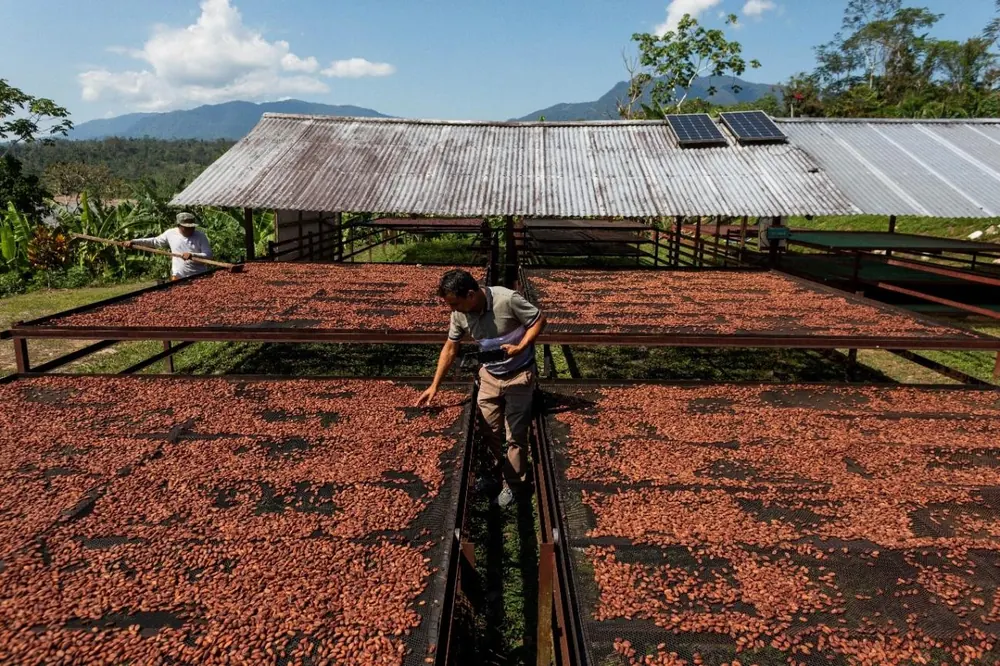
Cacao powder comes from the beans of the cacao tree (Theobroma cacao). After harvest, the beans are fermented and dried, then ground into a paste. Most of the fat, the cacao butter, is pressed out, and what’s left is milled into powder.
Peru is known for fine-flavor cacao: the International Cocoa Organization lists it among the countries that export “fine or flavour” cocoa.1 Cacao grows in the warm, humid valleys of the eastern Andes and the Amazon, in regions such as San Martín, Junín, Cusco and Ayacucho. How the beans are fermented and dried is covered in our guide Cacao from Peru.
| Plant | Cacao, Theobroma cacao |
|---|---|
| Where it grows in Peru | Eastern Andean valleys and the Amazon, mostly below 1,000 meters |
| Taste | Bitter, fruity and deep |
| Caffeine | About 12 mg per tablespoon2 |
| Best for | Hot chocolate, smoothies, oatmeal, brownies, cakes |
| Gluten | Naturally gluten free; check the pack if you need a certified product |
| Keeps | Sealed, until the best-before date; keep it dry once open |
Cacao vs cocoa: what’s the difference?
Both come from the same bean. In English, “cacao” usually means less processed powder, while “cocoa” usually means powder from roasted beans, often treated with an alkali (“Dutch-processed”) to make it darker and milder. There’s no legal line between the two words, so read the label: alkalized powder says “processed with alkali” or “Dutch-processed”.
| Natural cacao powder | Dutch-processed cocoa | |
|---|---|---|
| Processing | Fermented, dried, pressed and milled; no alkali | Treated with an alkali |
| Color | Lighter, reddish brown | Darker brown |
| Taste | Bitter, fruity, sharper | Milder, rounder |
| In baking | Acidic; pairs with baking soda | Neutral; pairs with baking powder |
How Peruvian cacao tastes
Cacao powder is intensely bitter, with fruity, nutty or floral notes that depend on the bean, the fermentation and the roast. Unsweetened, it’s far stronger than drinking chocolate: start small and sweeten to taste.
How to use cacao powder
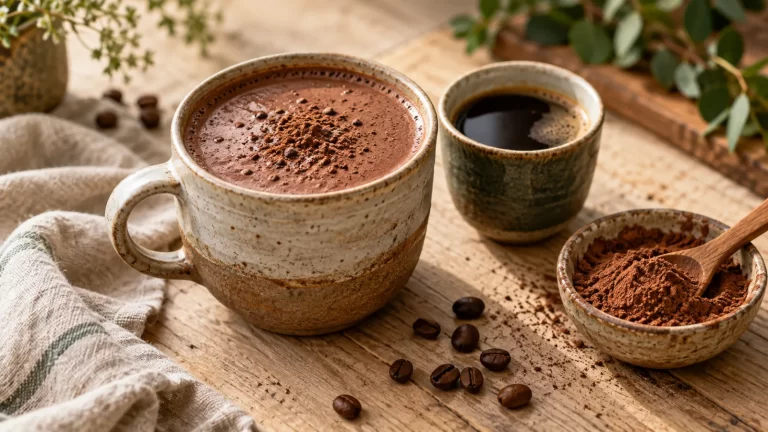
- Hot chocolate: whisk 1 to 2 tablespoons into a mug of warm milk and sweeten to taste.
- Smoothies: a tablespoon with banana, peanut butter, maca or lúcuma.
- Breakfast: stirred into oatmeal, yogurt or overnight oats.
- Baking: brownies, cakes and cookies. Natural cacao is acidic, so it works best in recipes with baking soda.
Brewed cacao is different: it’s made from ground roasted cacao beans steeped like coffee, not from powder. See Brewed cacao: what it is and how to make it.
Does cacao have caffeine?
A little. USDA reference values list about 230 mg of caffeine per 100 g of unsweetened cocoa powder, about 12 mg in a tablespoon.2 A 12-ounce cup of brewed coffee has about 113 to 247 mg.3 Cacao also contains theobromine, a related compound, in much larger amounts: about 2 g per 100 g.2
How to choose cacao powder
- Natural or alkalized: natural for a fruitier taste and recipes with baking soda; alkalized (Dutch-processed) for a darker, milder powder.
- 100% cacao, unsweetened: check there’s no added sugar or milk powder; that would be drinking chocolate.
- Organic: organic cacao powder carries a certification seal; each product page shows it as printed on the pack.
- “Raw”: usually means the beans weren’t roasted, or were dried at low temperatures. There’s no legal definition, so it’s a description, not a standard.
- Origin: look for “Product of Peru”. We name a region or variety only when the pack does.
Sources
- International Cocoa Organization. ICCO Panel recognizes 23 countries as fine and flavour cocoa exporters. 2016. icco.org
- U.S. Department of Agriculture, FoodData Central. Cocoa, dry powder, unsweetened (FDC ID 169593). fdc.nal.usda.gov
- U.S. Food and Drug Administration. Spilling the beans: how much caffeine is too much? fda.gov