The short answer
A cacao coffee alternative works if you want less caffeine, but it isn’t caffeine-free. One tablespoon of unsweetened cacao powder has about 12 mg of caffeine and 111 mg of theobromine, against about 95 mg of caffeine in an 8-ounce cup of brewed coffee (USDA). Expect a milder cup, not the same kick.
Cacao vs coffee at a glance
Coffee vs cacao comes down to two stimulants. Coffee gives you caffeine and no theobromine. Cacao gives you a little caffeine and much more theobromine, a related compound. And there are two different ways to drink cacao, which are easy to confuse.
| Cacao powder drink | Brewed cacao | Brewed coffee | |
|---|---|---|---|
| What’s in the cup | Unsweetened cacao powder, stirred in and drunk whole | Roasted, ground cacao beans (or husks), steeped and strained | Roasted, ground coffee, steeped and strained |
| Caffeine | About 12 mg per tablespoon | No USDA figure | About 95 mg per 8 fl oz |
| Theobromine | About 111 mg per tablespoon | No USDA figure | 0 mg |
| Fiber | About 2 g per tablespoon | No USDA figure | 0 g |
| What you need | Cacao powder and a whisk or spoon | Ground cacao beans and a French press or filter | Ground coffee and any brewer |
Source: USDA FoodData Central, SR Legacy (FDC 169593 and 171890). Per-serving figures are our calculation from USDA values per 100 g and USDA serving weights. USDA’s cacao figures are averages for unsweetened cocoa powder; a raw or Dutch-processed pack can differ, so check the label if it lists caffeine.
Caffeine in cacao vs coffee
Gram for gram, cacao powder looks stronger: USDA lists 230 mg of caffeine per 100 g of unsweetened cocoa powder and 40 mg per 100 g of brewed coffee. The serving size changes everything. A tablespoon of powder weighs 5.4 g, while a cup of coffee weighs 237 g, so per serving cacao has far less caffeine.
| Drink or serving | Caffeine | Theobromine |
|---|---|---|
| 1 tablespoon unsweetened cacao powder (5.4 g) | About 12 mg | About 111 mg |
| 2 tablespoons unsweetened cacao powder (10.8 g) | About 25 mg | About 222 mg |
| Brewed coffee, 8 fl oz | About 95 mg | 0 mg |
| Instant coffee, 6 fl oz | About 47 mg | 0 mg |
| Decaf brewed coffee, 8 fl oz | About 2 mg | 0 mg |
Figures calculated from USDA FoodData Central values per 100 g and USDA serving weights (cocoa powder FDC 169593; coffee 171890, 174130, 171889), rounded.
Coffee itself swings widely. In the FDA’s figures, 12 fl oz of regular brewed coffee holds anywhere from 113 to 247 mg.
How much cacao would match a cup of coffee?
About 7½ tablespoons of cacao powder, which nobody stirs into one mug. A normal cacao drink uses 1 or 2 tablespoons, so it carries roughly 12 to 25 mg of caffeine, somewhere between an eighth and a quarter of a cup of brewed coffee.
Caffeine in brewed cacao vs coffee
USDA has no entry for brewed cacao, and brand figures aren’t independently checked, so we won’t give you one. A brewed cup holds only what hot water pulls out of the ground beans, so the caffeine depends on how much you use and how long it steeps. It’s lower in caffeine than coffee, not free of it.
Theobromine: what the studies actually show
What theobromine is
Theobromine is the main methylxanthine in cacao, from the same chemical family as caffeine. USDA lists 2,060 mg per 100 g of unsweetened cocoa powder and none in brewed coffee. Its half-life in healthy volunteers is about 10 hours, according to a 2015 perspective article in Frontiers in Pharmacology. The same paper notes that the caffeine in cocoa is probably too little to activate neural mechanisms.
What human trials found
We found three small trials in healthy adults that tested theobromine, alone or in cocoa, against a placebo or caffeine for mood and alertness. Their results don’t point the same way.
| Study | Who | What they took | What happened | Same theobromine as |
|---|---|---|---|---|
| Smit 2004 | 20 and 22 volunteers, two double-blind studies | 11.6 g cocoa powder, or 19 mg caffeine plus 250 mg theobromine | Both improved self-rated energy and some reaction-time tasks compared with placebo | About 2 tbsp of cacao powder |
| Judelson 2013 | 24 young men, double-blind | 100, 200 or 400 mg theobromine; 100 mg caffeine for comparison | Theobromine didn’t consistently change mood or vigilance; caffeine reduced fatigue | About 1 to 3½ tbsp |
| Baggott 2013 | About 80 adults, randomized and double-blind | 250, 500 or 1,000 mg theobromine; 200 mg caffeine | Few effects at 250 mg; worse mood and a higher heart rate at higher doses; no change in blood pressure, which caffeine did raise | About 2, 4½ and 9 tbsp |
Tablespoon equivalents are our calculation from USDA’s 2,060 mg of theobromine per 100 g of unsweetened cocoa powder and a 5.4 g tablespoon.
So the picture is mixed: one small study saw a lift in self-rated energy with about two tablespoons’ worth of cocoa, another saw no change at similar theobromine doses, and high doses raised heart rate without the alert feeling of caffeine.
What isn’t proven
None of these trials tested a daily cacao drink as a coffee replacement. Claims you’ll see on cacao brands’ websites, such as “steady energy all day,” “no crash,” appetite control or heart benefits, aren’t backed by the studies above. If you switch, the change you can count on is less caffeine.
Brewed cacao vs a cacao powder drink
“Cacao coffee” can mean two different drinks, and the difference changes what ends up in your cup.
Brewed cacao
Brewed cacao is made from roasted, ground cacao beans, steeped in a French press or drip filter and strained, the same way you’d make coffee. Some cacao teas use the husks (shells) of the beans instead. Either way, you drink the liquid and throw away the grounds. For the ratio and steeping time, follow the pack. It needs ground beans or husks; cacao powder is a different product. We sell cacao powder, not beans or husks, so if brewed cacao is what you’re after, look for a pack sold as brewing cacao. For how the other cacao products compare, see how cacao nibs differ from cacao powder.
A cacao powder drink
This one is closer to unsweetened hot cocoa. You whisk the powder into hot water or milk and drink all of it. Because nothing is strained out, the USDA figures per tablespoon apply as they are, fiber included. Packs use the words “cacao” and “cocoa” loosely, and we sort out what each usually means in cacao powder vs cocoa powder.
Cacao beans vs coffee beans
Both are seeds of tropical plants that get roasted before use: cacao from the Theobroma cacao tree, coffee from Coffea plants. Inside, they’re quite different: coffee brews into a drink with caffeine but no theobromine, while cacao carries mostly theobromine, some caffeine and a fair amount of fat, still 13.7 g per 100 g in unsweetened powder. That fat, separated from the bean, is cacao butter.
How each one tastes
Coffee is roasty and bitter with some acidity. Unsweetened cacao is bitter and deeply chocolatey: fuller as a powder drink, thinner and closer to a strong tea when brewed.
What else is in the cup
Because you drink the whole powder, two tablespoons add some fiber and minerals. Black coffee is almost all water, with caffeine and a little potassium.
| Per serving, before milk or sugar | 2 tbsp cacao powder (10.8 g) | Brewed coffee, 8 fl oz |
|---|---|---|
| Calories | 25 | 2 |
| Fiber | 4.0 g | 0 g |
| Sugars | 0.2 g | 0 g |
| Magnesium | 54 mg | 7 mg |
| Potassium | 164 mg | 116 mg |
| Iron | 1.5 mg | Less than 0.1 mg |
Source: USDA FoodData Central, SR Legacy (FDC 169593 and 171890); our calculation per serving.
Cacao as a coffee alternative: how to make the switch
Using cacao as a coffee substitute is mostly about building a new habit. Here’s a starting point for one mug of a cacao powder coffee alternative. These are kitchen amounts to adjust to taste, not doses.
- Decide what you’re replacing: the caffeine (a cacao drink cuts most of it), the brewing ritual (that’s brewed cacao, from ground beans) or the taste (nothing replaces it exactly).
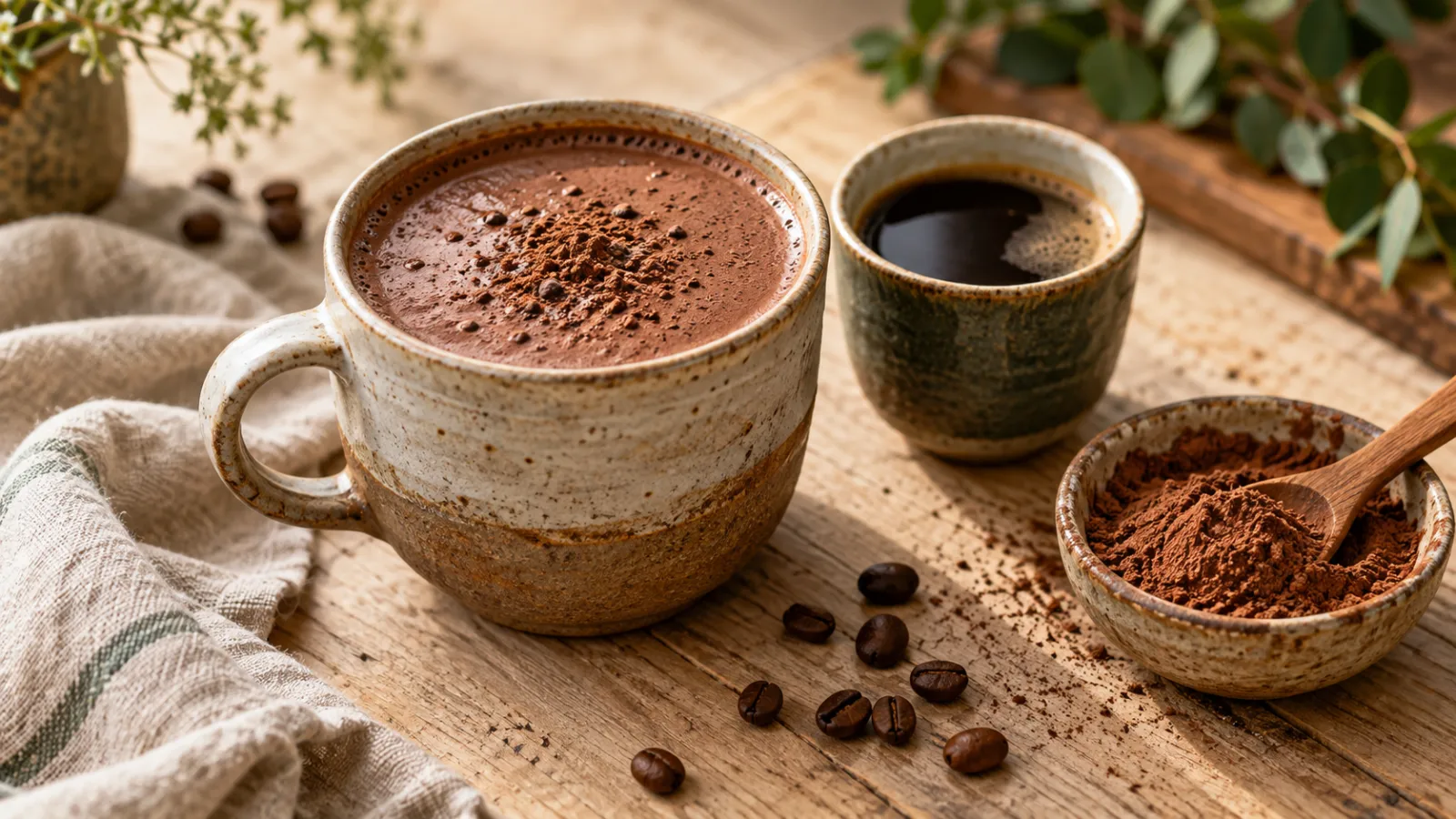
- Put 1 to 2 level tablespoons of unsweetened Peruvian cacao powder in a mug.
- Add 2 to 3 tablespoons of hot water or milk and mix into a thick, even paste. Cacao powder doesn’t dissolve like instant coffee, so this step stops lumps.
- Pour in about 8 fl oz of hot water or milk while stirring. A milk frother gives a smoother, foamier cup.
- Taste, then add a little sweetener, cinnamon or vanilla if you want. Stir again halfway, as some powder settles.
- Missing the caffeine? Try a half-and-half mug: half a cup (4 fl oz) of brewed coffee, about 47 mg of caffeine by USDA’s figures, plus 1 tablespoon of cacao powder, about 12 mg. That’s roughly 60 mg in total.
Who should be careful
The main points from the FDA and the trials above:
- Most adults: the FDA cites 400 mg of caffeine a day as an amount not generally linked to negative effects, though sensitivity varies a lot between people.
- Pregnancy, breastfeeding, medication or a health condition: talk to your doctor before making cacao a daily drink. Some conditions and medications make people more sensitive to caffeine, according to the FDA.
- Young children: the dietary guidelines the FDA cites say children under 2 shouldn’t have caffeinated drinks.
- Very large amounts of cacao: in the Baggott trial, 500 to 1,000 mg of theobromine raised heart rate. That’s about 4½ to 9 tablespoons of cacao powder at once, far more than a normal mug.
- Signs of too much caffeine from any source include a fast or pounding heartbeat, jitters, anxiety, trouble sleeping, an upset stomach, nausea and headaches (FDA).
Is cacao a good coffee alternative for you?
Whether cacao works as an alternative to coffee depends on what you want from your morning cup.
- Less caffeine, still a hot drink: a cacao powder drink.
- The brewing ritual: brewed cacao from ground beans, made in a press or filter.
- No caffeine at all: neither one. A caffeine-free herbal tea fits better. Even decaf coffee has a little: the FDA gives a typical 2 to 15 mg per 8 oz.
- The alertness of coffee: coffee. In the Judelson trial, caffeine reduced fatigue and theobromine didn’t. Smaller cups of ground or instant Peruvian coffee are another way to cut back.
Frequently asked questions
What is the healthiest coffee alternative?
There isn’t one answer, because it depends on what you’re trying to avoid. For no caffeine, water or a caffeine-free herbal tea. For a little caffeine, decaf coffee (about 2 mg a cup) or a cacao powder drink (about 12 mg per tablespoon), which also brings some fiber and magnesium. Whatever you choose, the sugar, syrups and cream you add can change the picture more than the base drink.
Will a cacao drink keep me awake at night?
It might, depending on you. A tablespoon of cacao powder has far less caffeine than a cup of coffee, but not zero. Theobromine also lingers: the body takes about 10 hours to clear half of it. The FDA notes that people differ widely in how sensitive they are to caffeine and how fast they clear it. If you sleep lightly, try your cacao drink earlier in the day first.
How much cacao powder goes in one cup?
Our starting point is 1 to 2 tablespoons per mug, for flavor rather than as a dose. For reference, the Smit study used 11.6 g of cocoa powder, about 2 tablespoons by USDA’s 5.4 g tablespoon. By USDA averages, that’s about 27 mg of caffeine and 240 mg of theobromine. Start with less if you’re new to the bitter taste of unsweetened cacao.
Can you mix cacao powder into coffee?
Yes, for a mocha-style cup. Just know that the cacao adds a little caffeine and some theobromine on top of the coffee’s own caffeine, instead of replacing any of it. If your goal is less caffeine, swap part of the coffee for cacao instead, as in the half-and-half mug above.
Is a cacao drink the same as hot chocolate?
Not quite. Hot chocolate is usually made from a sweetened mix or from chocolate, so it tastes sweet and milky. A drink made with unsweetened cacao powder is bitter and very low in sugar: USDA lists 1.75 g of sugars per 100 g of unsweetened cocoa powder, about 0.2 g in two tablespoons. Check the label of any mix for added sugar.
Shop Peruvian cacao powder
We buy cacao powder in Peru, read the label, and ship it to you, with origin and processing as each pack states them.
Sources
- U.S. Department of Agriculture, Agricultural Research Service, 2019. FoodData Central, SR Legacy: Cocoa, dry powder, unsweetened (FDC 169593); Beverages, coffee, brewed (171890); instant (174130); decaffeinated (171889). USDA.
- U.S. Food and Drug Administration, 2024. Spilling the Beans: How Much Caffeine is Too Much? FDA Consumer Updates.
- Smit HJ, Gaffan EA, Rogers PJ, 2004. Methylxanthines are the psycho-pharmacologically active constituents of chocolate. Psychopharmacology.
- Judelson DA, Preston AG, Miller DL, et al., 2013. Effects of theobromine and caffeine on mood and vigilance. Journal of Clinical Psychopharmacology.
- Baggott MJ, Childs E, Hart AB, et al., 2013. Psychopharmacology of theobromine in healthy volunteers. Psychopharmacology.
- Martínez-Pinilla E, Oñatibia-Astibia A, Franco R, 2015. The relevance of theobromine for the beneficial effects of cocoa consumption. Frontiers in Pharmacology.