What is Peruvian coffee?
Peru grows almost only arabica coffee, on the eastern slopes of the Andes between about 1,000 and 2,000 meters. Most of it comes from small family farms, often grown under shade trees. The cherries are usually washed, and the beans are dried in the sun before they’re exported or roasted. Peru is one of the world’s leading exporters of organic and Fairtrade coffee.
| Species | Arabica (Coffea arabica) |
|---|---|
| Altitude | About 1,000 to 2,000 meters |
| Main regions | Cajamarca, Junín, San Martín, Amazonas, Cusco, Puno |
| Processing | Mostly washed and sun-dried |
| Taste | Clean and mild, with cocoa, nut and caramel notes |
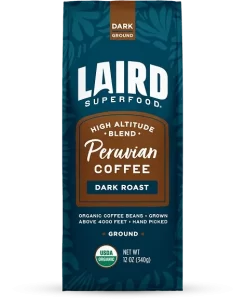
| Formats we sell | Ground and instant |
Peru’s coffee regions
Coffee grows along almost the whole length of the Peruvian Andes. These are the names you’ll see most often on packs:
| Region | Where | Good to know |
|---|---|---|
| Cajamarca | Northern Andes, around Jaén and San Ignacio | One of Peru’s largest coffee regions |
| Junín | Central jungle, around Chanchamayo and Satipo | Chanchamayo is a name often printed on Peruvian coffee |
| Pasco | Central jungle, around Villa Rica | Villa Rica coffee has a protected designation of origin |
| San Martín and Amazonas | Northern Amazon slopes | Large producing regions, many cooperatives |
| Cusco and Puno | Southern Andes | Coffees from high valleys, such as La Convención and Sandia |
Each product page names the region only when the pack does. For more on how the regions differ, read Peruvian coffee regions.
How Peruvian coffee tastes
Most Peruvian coffee is mild and balanced, with a medium body, gentle acidity and notes of cocoa, nuts and caramel. Coffees from higher farms can be brighter and fruitier. The roast matters as much as the origin: dark roasts taste of chocolate and toast, while light roasts keep more of the fruit.
Ground or instant?
| Ground | Instant | |
|---|---|---|
| What it is | Roasted beans, ground | Brewed coffee, dried into soluble granules or powder |
| How you make it | Drip, French press, pour-over or moka pot | Stir into hot water or milk |
| Taste | Fuller, more aroma | Simpler, quicker |
| After opening | Best within a couple of weeks | Keeps for months if kept dry |
How to brew Peruvian coffee
- Ratio: about 2 tablespoons of ground coffee for every 6 ounces (180 ml) of water. Adjust to taste.
- Water: just off the boil, around 195 to 205 °F (90 to 96 °C).
- French press: steep for 4 minutes, then press slowly.
- Drip or pour-over: use a medium grind and pour in slow circles.
- Maca coffee: whisk a teaspoon of maca powder into a little warm milk, then add the coffee.
The Peruvian way: café pasado. Hot water drips slowly through finely ground coffee to make a strong concentrate, which is then topped up with hot water or milk in the cup.
How to choose Peruvian coffee
- Ground or instant: ground for flavor; instant for speed.
- Roast: dark for chocolate and toast; medium for balance; light for fruit.
- Certifications: organic and Fairtrade seals are listed as printed on the pack.
- Region: if the pack names one, it’s on the product page.
- Freshness: check the roast or best-before date.