
What is quinoa flour?
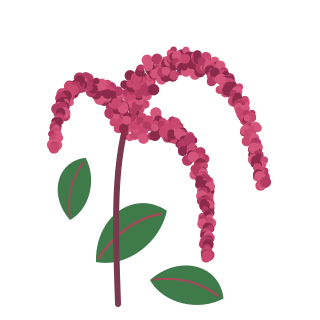
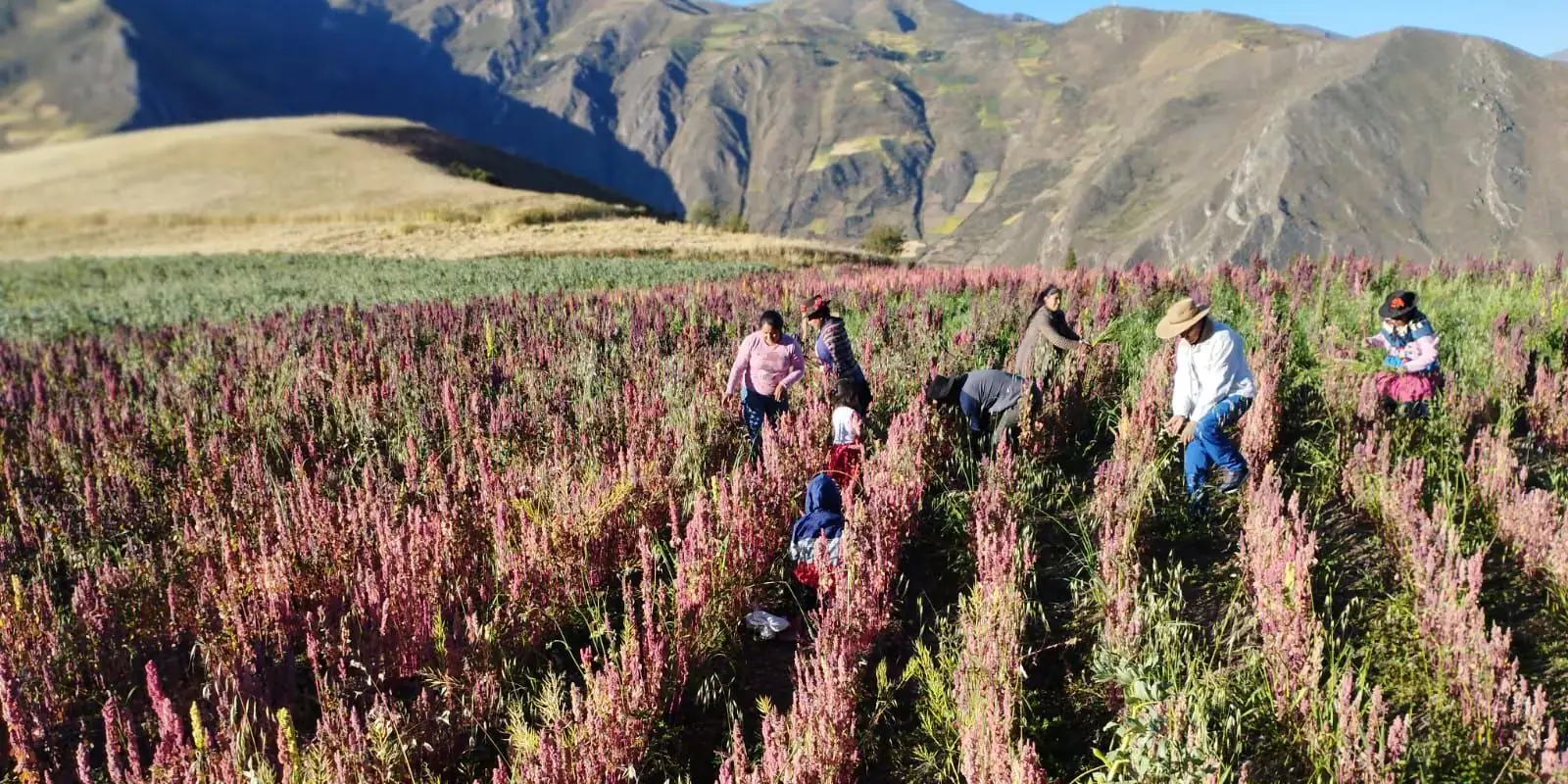
Quinoa (Chenopodium quinoa) is the seed of an Andean plant related to spinach and amaranth. Botanically it isn’t a grain, but it’s cooked and eaten like one. Peru is one of the world’s largest quinoa producers. Its biggest quinoa region is Puno, on the Altiplano around Lake Titicaca at about 3,800 meters, followed by Ayacucho and Apurímac.
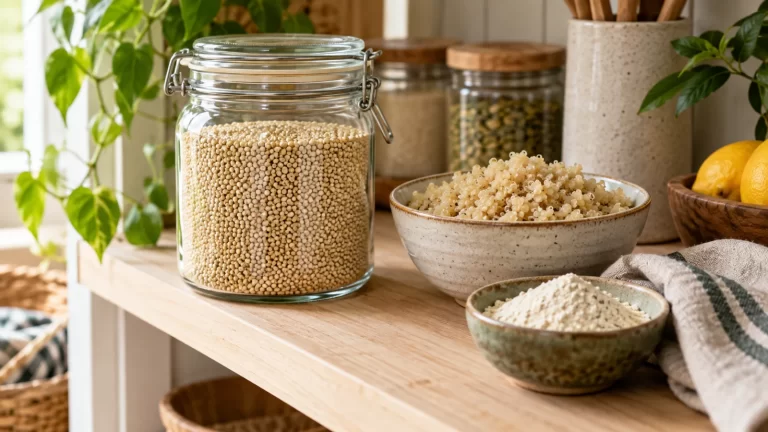
Quinoa flour is the whole seed, milled fine. Quinoa seeds are naturally coated in saponins, bitter compounds that are washed or polished off before milling. A trace can remain, which is why some quinoa flours taste slightly bitter.
| Plant | Quinoa, Chenopodium quinoa, a relative of spinach and amaranth |
|---|---|
| Where it grows | The Andes; in Peru, mainly Puno, Ayacucho and Apurímac |
| Taste | Nutty, earthy and slightly grassy |
| Gluten | Naturally gluten free; check the pack if you need a certified product |
| Protein | About 14 g per 100 g1 |
| Best for | Pancakes, flatbreads, muffins, cookies, brownies |
| Keeps | See the best-before date; flour goes stale sooner than whole seeds |
How quinoa flour tastes
Quinoa flour tastes nutty and earthy, with a slightly grassy note, and it’s stronger than wheat flour. In sweet recipes, chocolate, banana and spices go well with it. For a milder, toastier taste, toast the flour in a dry pan over low heat for a few minutes, stirring, and let it cool before you use it.
How to bake with quinoa flour
Quinoa flour has no gluten, so it doesn’t stretch or rise the way wheat flour does. There are two ways to use it:
- Mixed with wheat flour: replace up to a quarter of the flour in pancakes, muffins, cookies or quick breads for a nuttier taste.
- Fully gluten free: combine it with other gluten-free flours and starches, such as rice flour or tapioca, plus a binder like eggs, psyllium or xanthan gum.
| Recipe | How it works |
|---|---|
| Pancakes and waffles | Works well on its own or mixed; no rise needed beyond baking powder |
| Flatbreads and tortillas | Mix with a little starch so the dough rolls without cracking |
| Cookies and brownies | Chocolate hides the earthy taste; the texture stays tender |
| Muffins | Use it for part of the flour; eggs hold the crumb together |
| Yeast bread | Only as part of the flour; on its own it won’t rise |
| Soups and sauces | Thickens like other flours; cook it for a few minutes |
Is quinoa flour gluten free?
Yes, quinoa is naturally gluten free. But a flour can pick up traces of wheat if it’s milled or packed alongside wheat. If you have celiac disease or need to avoid gluten strictly, choose a pack labeled gluten free or certified gluten free. Each product page here says what the pack states.
Quinoa flour nutrition
Quinoa flour is milled from the whole seed, so it keeps the seed’s nutrients. Reference values for uncooked quinoa, per 100 g:1
| Energy | 368 kcal |
|---|---|
| Protein | 14.1 g |
| Carbohydrate | 64.2 g |
| Fiber | 7.0 g |
| Fat | 6.1 g |
How to choose quinoa flour
- Gluten-free label: needed only if you avoid gluten strictly (see above).
- Organic: organic quinoa flour carries a certification seal; each product page shows it as printed on the pack.
- Origin: look for “Product of Peru” on the label.
- Fresh and sealed: flour goes stale faster than whole seeds. Check the best-before date and store it well once open; our guide Does quinoa go bad? explains how.
Sources
- U.S. Department of Agriculture, FoodData Central. Quinoa, uncooked (FDC ID 168874). fdc.nal.usda.gov