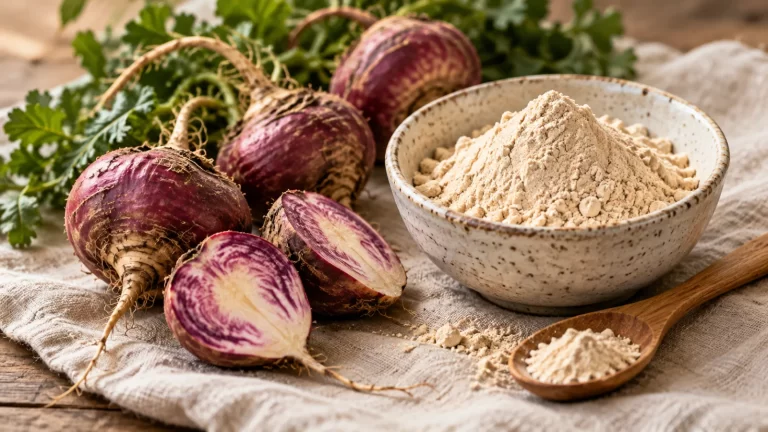
The short answer
Black maca and red maca are the same plant, Lepidium meyenii. Only the color of the root is different. Black maca usually tastes stronger and earthier; red maca tastes milder and a little sweeter. Both are grown in smaller amounts than yellow maca, so they tend to cost more.
Same plant, different color
Maca is a root grown on the high plateaus of central Peru, mostly in Junín and Pasco, between 3,800 and 4,500 meters. Few other crops survive up there: the nights freeze for much of the year and the sun is strong by day.
A single field produces roots in several colors, from cream and yellow to pink, red, purple and almost black. Producers sort the harvest by color so each one can be dried, milled and sold on its own.
Yellow is the most common color by far. Red and black make up a smaller share of each harvest, which is why their packs name the color on the front.
How they taste
All maca tastes malty and nutty, a little like butterscotch or toasted grain. The color shifts the balance:
| Yellow maca | Red maca | Black maca | |
|---|---|---|---|
| Share of the harvest | Most common | Less common | Least common |
| Taste | Mild, malty | Milder, slightly sweet | Strong, earthy, a little bitter |
| Price | Usually the lowest | Usually higher | Usually the highest |
| Works well in | Smoothies, porridge | Yogurt, fruit smoothies | Coffee, cacao drinks |
Price and availability
Because a field gives fewer red and black roots, both cost more per gram than yellow maca. In Lima, black maca powder is fairly easy to find in supermarkets. Red maca is harder: big supermarkets mostly stock it in capsules, and the powder tends to come from health food stores.
How to use them
Use black and red maca the same way you’d use yellow maca: stir the powder into food or drinks. Start with one teaspoon (about 3 g) a day and follow the serving printed on the pack.
- Smoothies: a teaspoon with banana, milk and a few dates.
- Breakfast: stirred into porridge, overnight oats or yogurt.
- Hot drinks: in coffee, a latte or hot chocolate. Black maca suits these best.
- Baking: in energy balls, pancakes or cookie dough.
Tip: maca clumps in hot liquids. Whisk it into a spoonful of warm milk first, then top up the cup.
Raw or gelatinized?
Gelatinized maca has been cooked under pressure before it’s dried and milled, which breaks down much of its starch. It mixes more smoothly and tastes milder. Raw maca keeps a stronger, more vegetal taste. Both come in every color, and the pack usually says which one it is.
Which one to buy
Choose by taste and budget:
- New to maca: start with yellow maca, the mildest and least expensive.
- For coffee and chocolate drinks: black maca, for its stronger, earthier taste.
- For smoothies and yogurt: red maca, milder and a little sweet.
We don’t sell maca on health promises. If you want to take it for a health reason, talk to your doctor first.
Questions about black and red maca
Does black maca taste stronger than red maca?
Yes. Black maca is usually the earthiest of the three colors, and red is the mildest and sweetest.
Can I mix black and red maca?
Yes. Some packs already mix several colors. Keep the total amount to the serving printed on the pack.
Does maca powder go bad?
Sealed, it keeps for a year or more; the best-before date is on the pack. Once open, close the pouch tightly and keep it somewhere cool, dry and dark.