What is kiwicha?
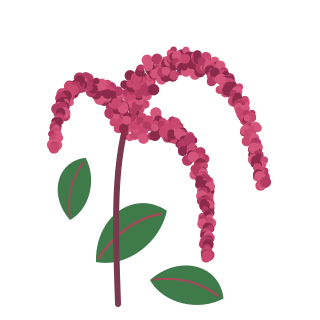
Kiwicha (Amaranthus caudatus) is the Andean species of grain amaranth. The plant grows tall, with long red, purple or golden tassels full of tiny seeds, each about the size of a poppy seed. Botanically it isn’t a grain, but it’s cooked and eaten like one, like its relative quinoa.
In Peru, kiwicha grows in the valleys of the Andes, between about 1,500 and 3,300 meters, in regions such as Cusco, Ayacucho, Arequipa and Áncash.1 It has been grown there for centuries and is eaten as flour and flakes, cooked with milk, or toasted and mixed with honey into sweets.1
| Plant | Kiwicha, Amaranthus caudatus, the Andean grain amaranth |
|---|---|
| Also called | Amaranth (English), amaranto (Spanish) |
| Where it grows in Peru | Andean valleys, about 1,500 to 3,300 meters1 |
| Taste | Toasty, nutty and earthy |
| Gluten | Naturally gluten free; check the pack if you need a certified product |
| Protein | About 13.6 g per 100 g2 |
| Forms | Flour, whole seeds, popped seeds and flakes |
| Keeps | See the best-before date; flour goes stale sooner than whole seeds |
Kiwicha in English
Kiwicha is called amaranth in English and amaranto in Spanish. “Kiwicha” is the name used in Peru for the Andean species, Amaranthus caudatus. Amaranth grown in other countries is often a different species, such as Amaranthus cruentus or Amaranthus hypochondriacus, but all three are eaten the same way. Read more in Kiwicha in English: why it’s sold as amaranth.
How kiwicha tastes
Kiwicha tastes toasty, nutty and a little earthy, stronger than wheat and closer to buckwheat. Popped, it tastes almost like popcorn. Cooked whole, it turns soft and creamy, like a thick porridge, rather than fluffy like rice or quinoa.
How to use kiwicha flour
Kiwicha flour has no gluten, so it doesn’t rise on its own. Use it like this:
- Mixed with wheat flour: replace up to a quarter of the flour in pancakes, muffins, cookies or bread for a toasty taste.
- Gluten-free baking: combine it with other gluten-free flours, such as rice flour or quinoa flour, plus starch and a binder like eggs or psyllium.
- Porridge and drinks: whisk 2 tablespoons into a cup of milk and simmer for a few minutes, stirring. In Peru, kiwicha with milk is a common breakfast.
- Thickening: a spoonful thickens soups, stews and sauces.
Peruvian classic: bolitas de kiwicha, small snack balls of popped kiwicha bound with honey. You pop the whole seeds in a hot, dry pan, a spoonful at a time, until they burst like tiny popcorn.
Kiwicha vs quinoa
Both are Andean seeds from the same plant family, both are naturally gluten free, and their reference nutrition values are close.2, 3 The differences are in size, taste and texture:
| Kiwicha (amaranth) | Quinoa | |
|---|---|---|
| Seed size | Tiny, like a poppy seed | Larger, about 2 mm |
| Taste | Toasty, earthy, popcorn-like | Nutty, slightly grassy |
| Cooked texture | Soft and creamy, like porridge | Fluffy, separate grains |
| Protein | 13.6 g | 14.1 g |
| Fiber | 6.7 g | 7.0 g |
| Energy | 371 kcal | 368 kcal |
Kiwicha nutrition
Kiwicha flour is milled from the whole seed. Reference values for uncooked amaranth grain, per 100 g:2
| Energy | 371 kcal |
|---|---|
| Protein | 13.6 g |
| Carbohydrate | 65.3 g |
| Fiber | 6.7 g |
| Fat | 7.0 g |
We sell kiwicha as a food. We don’t make claims about what it does for your health.
How to choose kiwicha flour
- 100% kiwicha: some flours are blends. Check the ingredients list says kiwicha or amaranth only.
- Gluten-free label: needed only if you avoid gluten strictly, because flour can pick up traces of wheat during milling.
- Organic: organic kiwicha carries a certification seal; each product page shows it as printed on the pack.
- Origin: look for “Product of Peru” on the label.
- Fresh and sealed: check the best-before date; once open, keep it sealed somewhere cool and dry.
Sources
- Instituto Nacional de Innovación Agraria (INIA), Peru. Cultivo de kiwicha. 2010. inia.gob.pe
- U.S. Department of Agriculture, FoodData Central. Amaranth grain, uncooked (FDC ID 170682). fdc.nal.usda.gov
- U.S. Department of Agriculture, FoodData Central. Quinoa, uncooked (FDC ID 168874). fdc.nal.usda.gov