The short answer
Three small cupping studies from Peru sketch the Peruvian coffee flavor profile. In San Martín, cuppers noted chocolate, citrus, floral and peanut notes; in Huánuco, every lot scored full marks for clean cup and sweetness. In Cajamarca and Huánuco, acidity and body were rated “very good” or better, and higher farms scored better.
The Peruvian coffee flavor profile in cupping studies
Most descriptions of Peruvian coffee online come from roasters describing their own bags. We looked for something more neutral: Peruvian studies where trained cuppers scored coffee from known farms, altitudes and varieties using Specialty Coffee Association forms. We found three. All are small, and all tested wet-processed arabica.
| Study | Where | Altitude | Varieties | Scores | What stood out |
|---|---|---|---|---|---|
| Estrella Gamonal 2017 | San Martín (Lamas, Rioja) | 800–1,200 m | Caturra, Pache, Catuaí, Catimor | 80.2–82.1 (beverage quality) | Aroma notes included chocolate, sweet, floral, fruity, citrus and peach, but also woody and grassy |
| Santacruz 2020 | Cajamarca (Jaén) | 900–1,860 m | Typica, Caturra, Costa Rica, Catimor | 81.5–95.2 (SCA) | Acidity and body scored highest on the highest farm |
| Chávez Rafael 2021 | Huánuco (Leoncio Prado) | 800–1,850 m | Arabica, variety not named | 75.5–85.5 (SCAA) | Clean cup, sweetness and uniformity reached the top score of 10 |
Sources: the three studies linked in the table. Scales differ: the San Martín study adds up attribute scores into a “beverage quality” figure, so it isn’t directly comparable with the 100-point SCA scores.
What does Peruvian coffee taste like?
In the San Martín study, cuppers described the aroma with words like chocolate, sweet, floral, fruity, citrus and peach. In the cup they added jasmine and peanut. They also recorded woody, grassy and vegetable notes. The study doesn’t say how often each note came up, so read them as the range one panel found in four varieties from one region, not as the taste of all Peruvian coffee.
Body and acidity
The studies score acidity and body for quality, not strength: a high score means the cuppers judged them good, not that the cup was more acidic or heavier. In Huánuco, acidity and body scored between about 7.1 and 7.6 out of 10, in the “very good” band. In the Jaén study, Typica and Caturra from the highest farm (1,860 m) scored 9.3 and 9.7 out of 10 for acidity, a level the authors call “extraordinary.” Both varieties scored lower on acidity and body at the lower farms. We found no measurement showing that Peruvian coffee is less acidic than coffee from other countries.
Clean and sweet in Huánuco
In the Huánuco study, clean cup, sweetness and uniformity reached the maximum score of 10, meaning no cup was marked down. Overall scores still ranged from 75.5 to 85.5, so the gaps came from the other attributes, such as aroma, flavor and aftertaste. On average, the lowest farms scored lowest.
Peruvian coffee characteristics: what shapes the cup
Altitude
This is the factor with the clearest numbers. In Huánuco, average scores rose from 79.0 on the lowest farms to 83.4 on the highest. One small study in Jaén found a steeper climb for Typica and Caturra.
| Study and coffee | Lower farms | Middle farms | Higher farms |
|---|---|---|---|
| Jaén, Typica | 85.9 (900 m) | 90.8 (1,250 m) | 95.2 (1,860 m) |
| Jaén, Caturra | 87.3 | 92.1 | 95.1 |
| Jaén, Catimor | 81.5 | 82.6 | 82.3 |
| Huánuco, average of 18 lots | 79.0 (800–1,200 m) | 81.1 (1,201–1,500 m) | 83.4 (1,501–1,850 m) |
Sources: Santacruz et al. 2020 (12 lots, six cuppers) and Chávez Rafael and Ordoñez Gómez 2021 (18 lots, four cuppers). Small studies; treat the exact numbers with caution.
Altitude isn’t everything. In San Martín, where the farms sat between 800 and 1,200 m, altitude on its own made no significant difference. Pache and Caturra did gain from the higher plots, according to Estrella Gamonal and colleagues.
Variety
The varieties that turn up in these Peruvian studies are Typica, Caturra, Pache, Catuaí, Costa Rica and Catimor. Catimor scored lowest in both Jaén and San Martín, and in Jaén it barely changed with altitude. Typica and Caturra came out on top in Jaén; in San Martín, Caturra and Pache came out best.
Processing
All three studies used the wet method: the cherries were pulped and the beans fermented before drying. In San Martín the beans fermented for 24 hours, were washed and then dried in the sun for six to seven days. None of the studies tested natural or honey-processed coffee, so they can’t tell you how those taste by comparison.
Region
The studies cover parts of San Martín, Cajamarca and Huánuco, so one study’s notes can’t describe a whole region. A pack may name a region: some of the Peruvian coffee we stock lists Chanchamayo, Cajamarca or Villa Rica. Read the region as a clue to the farm’s altitude and growing conditions, not as a guaranteed flavor. We go through the regions and styles you’ll see on labels in the types of Peruvian coffee.
Is Peruvian coffee good?
It can be very good, and it can be ordinary. In the Huánuco study, scores ran from 75.5 to 85.5, and the authors note that coffee scoring above 80 is considered specialty and can be exported. Their lowest farms averaged just under that line. In one small study in Jaén, high-altitude Typica and Caturra earned the top “exceptional” rating, while Catimor from the same farms stayed around 82.
Peru also grows a lot of it. The USDA Foreign Agricultural Service estimates production at 4.78 million 60-kg bags for the 2026/27 season, about the same as the year before, with 4.55 million bags exported. The United States was the top buyer in the latest season, taking 32% of exports. Most Peruvian coffee is grown to be sold abroad, and the US buys more of it than any other country.
In these studies, what separated a good cup from an ordinary one was the lot: its altitude and its variety.
How to taste Peruvian coffee at home
You don’t need a cupping lab. With a few habits you can pick out what the studies describe:
- Brew it black the first time, with no milk or sugar. Ground coffee gives you more to notice than instant.
- Smell the dry grounds, then the brewed cup. Look for chocolate, nuts, citrus or flowers.
- Let the cup cool for a few minutes before you judge it. Sweetness and fruit are easier to pick out when the coffee is warm, not scalding.
- Note three things: sweetness, acidity (sharp or soft) and body (light or full). Cuppers score these too, but for quality rather than strength.
- Check the pack for region or altitude and compare two coffees side by side.
For brewing methods and a classic Peruvian way to serve it, see how to brew Peruvian coffee.
Frequently asked questions
What does “Peruvian coffee” mean?
It means coffee grown in Peru, called café peruano in Spanish. On a pack, those words tell you the country of origin and nothing more. Region, altitude, variety and processing only appear if the label states them, so read past the front. All three Peruvian cupping studies we cite here tested arabica coffee (Coffea arabica), washed.
Which is better, Peruvian or Colombian coffee?
Neither origin is better across the board. In the Peruvian studies, altitude and variety moved the scores more than anything else. Even within one Peruvian district, the Jaén study found scores from about 81 to 95 depending on farm height and variety. We compare the two origins in more detail in Peruvian vs Colombian coffee.
Is Peruvian coffee strong?
Strength in taste comes from the roast and how much coffee you use. In caffeine, an 8 fl oz cup of brewed coffee averages about 95 mg in USDA data, and the FDA gives 113 to 247 mg for 12 fl oz. We found no data showing Peruvian coffee has more or less caffeine than other arabica.
Does Peruvian coffee taste like chocolate?
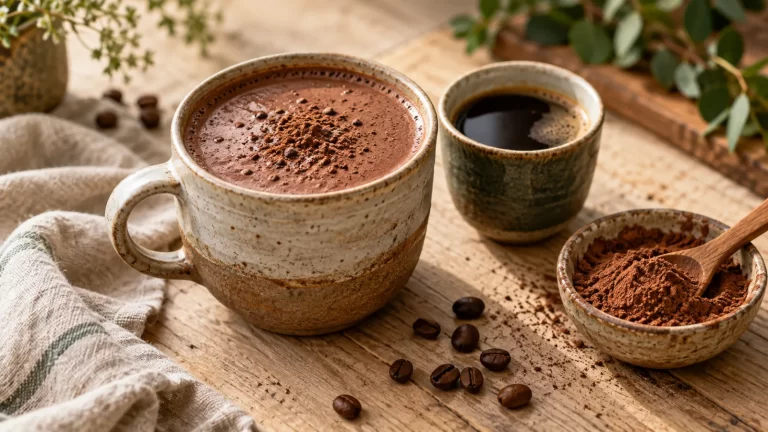
It can. Chocolate was one of the aroma and flavor notes cuppers recorded in the San Martín study, along with sweet, floral, fruity and citrus notes. In unflavored coffee that note comes from the beans themselves, not from added cocoa. The study doesn’t say how often it came up. If you want real cacao in your morning cup, see how cacao compares with coffee.
Is Peruvian coffee low in acid?
Not as a rule. We found no study comparing its acidity with other origins. In the Peruvian studies, acidity is scored as a quality, and the highest farms in Jaén had the best-rated acidity. If you prefer a softer cup, a medium or darker roast usually tastes less sharp than a light roast of the same coffee.
Shop Peruvian coffee
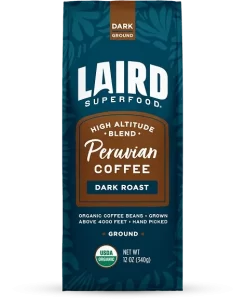
We buy ground and instant coffee in Peru, read the label, and ship it to you, with the region when the pack states one.
- Best seller
Sources
- Estrella Gamonal L, Vallejos-Torres G, Arévalo López L, 2017. Sensory analysis of four cultivars of coffee (Coffea arabica L.), grown at different altitudes in the San Martin region – Peru. Ciência Rural.
- Santacruz R, Tirado J, Minchán H, 2020. Perfil sensorial de cuatro variedades de café (Coffea arabica L.) cultivados en diferentes altitudes del distrito de San José del Alto-Jaén. Revista Científica Pakamuros.
- Chávez Rafael AA, Ordoñez Gómez ES, 2021. Influencia de la altitud en la calidad y estabilidad térmica de granos de Coffea arabica L. Agroindustrial Science.
- USDA Foreign Agricultural Service, 2026. Peru: Coffee Annual (GAIN report PE2026-0008). USDA FAS.
- U.S. Department of Agriculture, Agricultural Research Service, 2019. FoodData Central, SR Legacy: Beverages, coffee, brewed, prepared with tap water (FDC 171890). USDA.
- U.S. Food and Drug Administration, 2024. Spilling the Beans: How Much Caffeine is Too Much? FDA Consumer Updates.