

In short
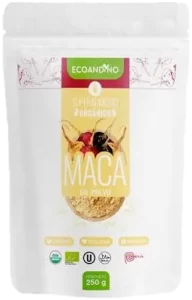
Gelatinized yellow maca powder 250g is instant-dissolving maca made from a single declared ingredient: 100% dried yellow maca root. The gelatinization step partly breaks down the starch, so it disperses into yogurt, smoothies and milk without clumping. 250 g is about 50 daily servings.
What is gelatinized yellow maca?
Yellow maca is the pale-gold variant of Lepidium meyenii that makes up the majority of a typical Andean maca harvest. Gelatinization is the step that turns it from a raw root flour into an instant powder: the dried root is cooked, which partly breaks down its starch, and then milled.
The result is a powder that behaves in liquid the way a good drinking chocolate does: it disperses on contact instead of sitting on the surface or sinking in lumps.
What makes this yellow maca different
A one-line ingredient list you can actually check
“100% Maca Amarilla Seca,” as stated on the pack: 100% dried yellow maca. No blend of colors, no bulking agent, no maltodextrin. Many maca powders won’t tell you which color they used at all.
Made for cold food and drinks
The instant mixing is most noticeable in cold liquid, where raw maca struggles most. It’s the version that works in a yogurt bowl or a cold smoothie without a blender.
A practical size
250 g at 5 g a day is 50 servings, or a little over seven weeks: a practical size for daily use.
Taste profile
Mild, malty and gently sweet with a light caramel note. Yellow is the softest-tasting of the three maca colors, and gelatinization softens it further. It disappears entirely into fruit yogurt.
How to use it
Daily serving
One tablespoon (5 g) a day. For children or first-time users, a teaspoon (3 g) is the sensible starting point.
Ways to use it
| Use | How |
|---|---|
| Yogurt | Fold 5 g into plain or fruit yogurt |
| Smoothies | Blends without grit |
| Cold milk | Stir in directly, no lumps |
| Breakfast bowls | Over granola and fruit |
| Juice | Into orange or passion fruit (maracuyá) juice |
| Warm drinks | Whisk into milk with cinnamon |
Where it comes from
Peruvian yellow maca, dried and gelatinized before milling. Yellow maca is the type Andean households have always eaten as an everyday food.
Who it’s for
A good fit if you want to know exactly which maca color you’re buying, take maca in cold food, or share it with the family.
Look elsewhere if you want a sweeter taste (red maca) or a stronger one (black maca). If you’re pregnant, breastfeeding or have a thyroid condition, talk to your doctor before taking maca.
Nutrition
Reference values for gelatinized maca powder, per 100 g. The label on the pack may differ slightly.
| Energy | About 330 kcal |
|---|---|
| Protein | 15 g |
| Carbohydrate | 68 g |
| of which fiber | 8 g |
| Fat | 1.2 g |
| Calcium | 250 mg |
| Iron | 15 mg |
| Potassium | 2,000 mg |
Specifications
| Botanical name | Lepidium meyenii |
|---|---|
| Variety | Yellow, single color |
| Ingredients | 100% dried yellow maca root |
| Processing | Gelatinized |
| Net weight | 250 g / 8.8 oz |
| Servings | About 50 × 5 g |
| Solubility | Instant |
| Origin | Peru |
Gelatinized yellow maca, raw yellow maca and a three-color blend compared
| Gelatinized yellow maca | Raw yellow maca | Three-color maca blend | |
|---|---|---|---|
| Color declared | Yes, yellow only | Usually | No |
| Dissolves cold | Yes | Poorly | Varies |
| Flavor | Mild | Earthy | Mixed |
| Traceability | High | High | Low |
| Best for | Yogurt, cold drinks | Baking | General use |
Storage
Keep it cool, dry and sealed, away from sunlight. Gelatinized maca draws moisture from humid air, so close the container properly and never store it near a kettle or stove.
Questions
Does “100% dried yellow maca” mean it’s unprocessed?
It means there’s one ingredient in the bag. The root has still been dried, gelatinized and milled: those are processing steps, not ingredients. Nothing has been added.
Will it dissolve in cold milk?
Yes. That’s the main advantage of gelatinized maca over raw. Stir it into cold milk, juice or yogurt and it disperses without a blender.
Can children have yellow maca?
Maca is a traditional food in Peru and is often given to children in smaller amounts, a teaspoon rather than a tablespoon. Check with your pediatrician before adding any supplement to a child’s diet.
Can I take maca every day?
Yes. In the Andes maca is eaten as an everyday food. Keep to the serving on the pack, one tablespoon (5 g) a day.
How many tablespoons are in 250 g?
About 50, at 5 g per level tablespoon.
Does maca need to be refrigerated?
No, and it shouldn’t be. Refrigeration causes condensation inside the pack, which makes the powder clump. A cool, dry cupboard is ideal.
What’s the difference between this and “instant” maca?
None. “Instant” and “gelatinized” describe the same processing step; different brands use different names for it.