

In short
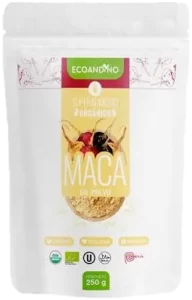
Maca flour 200g is finely milled dried maca root sold in the format Peruvian households actually buy it in: a plain kitchen bag, priced for daily cooking rather than as a specialty supplement. It behaves like a flour. It folds into batters, thickens porridge and blends into drinks, adding a malty, butterscotch note wherever it goes.
What is maca flour?
Maca flour and maca powder are the same material under two names. “Flour” (harina in Spanish) is what it’s called in Peru when it’s sold for the kitchen, and it signals a fine grind meant to be measured by the spoon into batters and porridges. “Powder” is the name it takes on when it’s sold as a supplement in a health-food aisle.
The root itself is Lepidium meyenii, grown on the Andean plateau at around 4,000 meters, then dried and milled to a fine flour.
What makes this maca flour different
It’s priced as a food, not as a supplement
This is the format Peruvians cook with. Same root, without the specialty-supplement premium, which matters when you’re using a tablespoon a day rather than a pinch.
Fine enough to bake with
A coarse grind gives baked goods a gritty texture. This one is milled fine enough to replace part of the flour in a recipe without changing the crumb.
Plain packaging, honest product
No branding premium. One ingredient, plainly labeled.
Taste profile
Malty and nutty with a butterscotch background. It’s noticeable in a plain glass of water and almost invisible once baked into banana bread, pancakes or cookies, where it reads as a warm caramel note rather than as “maca.”
How to use maca flour
Daily serving
1 tablespoon (5 g) a day is the standard serving. A 200 g bag gives about 40 of them.
Ways to use it
| Use | How |
|---|---|
| Baking | Replace 10–15% of the flour in bread, cookies, muffins or pancakes |
| Porridge | Stir 5 g into oatmeal or quinoa porridge off the heat |
| Smoothies | 5 g with banana and milk |
| Pancake batter | 1 tbsp per 100 g of flour |
| No-bake bites | Blend with dates and oats |
| Hot drinks | Whisk into milk with cinnamon |
Don’t replace more than about 20% of the wheat flour in a bread recipe: maca has no gluten, so the loaf won’t rise properly beyond that.
Where it comes from
Peruvian-grown maca root, harvested and processed in Peru. Peru supplies the large majority of the world’s maca, and the crop is grown almost entirely on the high plateau of the central Andes.
Who it’s for
A good fit if you bake, cook for a family, use maca daily and want the practical format, or want to try maca without paying supplement prices.
Look elsewhere if you need certified organic: this format isn’t sold as certified organic. If you’re pregnant, breastfeeding or have a thyroid condition, talk to your doctor before taking maca.
Nutrition
Reference values for maca flour, per 100 g. The label on the pack may differ slightly.
| Energy | About 325 kcal |
|---|---|
| Protein | 14 g |
| Carbohydrate | 71 g |
| of which fiber | 7 g |
| Fat | 1.2 g |
| Calcium | 250 mg |
| Iron | 15 mg |
| Potassium | 2,000 mg |
Specifications
| Botanical name | Lepidium meyenii |
|---|---|
| Format | Fine-milled flour |
| Net weight | 200 g / 7 oz |
| Packaging | Bag |
| Servings | About 40 × 5 g |
| Baking substitution | Up to 15% of total flour |
| Allergens | None declared |
| Origin | Peru |
Maca flour, organic maca powder and gelatinized maca compared
| Maca flour | Organic maca powder | Gelatinized maca | |
|---|---|---|---|
| Grind | Fine, bake-ready | Fine | Fine |
| Positioning | Kitchen staple | Supplement | Supplement |
| Certification | Not certified organic | Organic | Organic |
| Best for | Baking and drinks | Drinks | Drinks |
| Price per gram | Lowest | Higher | Highest |
Storage
Keep it in a sealed container, cool and dry, away from sunlight. Once opened, move it to an airtight jar if the bag doesn’t reseal. Use within 12 months.
Questions
Is maca flour the same as maca powder?
Yes. They’re the same milled maca root. “Flour” is the Peruvian kitchen name and usually signals a fine grind sold for cooking; “powder” is the health-food name for the identical product.
Can I bake with maca flour?
Yes, and it’s one of the best uses for it. Replace 10–15% of the flour in your recipe. Because maca contains no gluten, going much beyond 20% will affect how bread rises.
Does baking destroy maca’s nutrients?
Protein, fiber and minerals hold up in the oven. Heat does soften maca’s flavor, so if you want its full malty taste, stir it into cold or warm food; if you want it in your cookies, bake with it and don’t worry about it.
How much maca flour equals a teaspoon of maca powder?
Exactly the same: they’re the same product, so measure them the same way. One teaspoon is about 3 g, one tablespoon about 5 g.
Why is maca flour cheaper than maca powder?
Because it’s sold as a kitchen staple rather than as a supplement, usually without organic certification and without specialty packaging. The root is the same.
Will maca flour make my bread rise?
No. It contains no gluten and no leavening. Use it as a partial substitute alongside a flour that does, and keep your usual yeast or baking powder.
Does it taste strong in baked goods?
Less than you’d expect. In banana bread, cookies or pancakes it reads as caramel and malt rather than as a distinct ingredient.