

In short
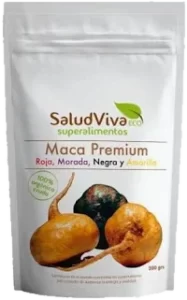
Instant red maca powder is gelatinized red maca grown in Junín and Cerro de Pasco, according to the producer: the two high-Andean regions that produce most of Peru’s maca. Red is the sweetest of the three maca colors, and this powder dissolves in seconds in milk, oats, a smoothie or juice. It comes in a resealable bag in three sizes: 200 g, 500 g and 1 kg.
What is instant red maca?
“Instant” is another name for gelatinized: the dried root is cooked to break down its starch before milling, which turns a powder that clumps into one that dissolves.
Red maca is the pink-skinned variant of Lepidium meyenii, about a quarter of a typical harvest and the sweetest of the three colors. Made instant, it becomes something you can stir into a glass at your desk rather than something that needs a blender and a rinse afterward.
What makes this red maca different
Two named regions
Junín and Cerro de Pasco sit side by side on the central Andean plateau above 4,000 meters, and between them they grow most of Peru’s maca. The producer names both, which is more origin detail than most maca powders offer.
Three sizes, one product
200 g to start, 500 g once it’s a habit, 1 kg for a household. Same maca throughout.
A morning habit
The producer suggests taking it first thing in the morning, before breakfast. It’s a common way to take maca in Peru, and an easy habit to keep.
Taste profile
Sweet and malty with caramel notes, smoothed by the instant processing. Red is the sweetest of the three colors, which makes it the easiest to drink plain, and this one dissolves cleanly enough to do so.
How to use it
Daily serving
One tablespoon (5 g) a day, mixed with milk, oats, a smoothie or juice, preferably before breakfast. It also works in baking.
Ways to use it
| Use | How |
|---|---|
| Morning drink | 5 g in warm milk or water, before breakfast |
| Oats | Stirred in off the heat |
| Smoothies | Blends in smoothly |
| Juice | Shaken in |
| Baking | Cookies, muffins, bars |
| Desk drink | Powder, a splash of liquid, stir, top up |
Where it comes from
Junín and Cerro de Pasco, on the high plateau of the central Peruvian Andes. According to the producer, the roots are harvested by hand, sorted by color, dried and gelatinized before milling, then packed in a resealable polyethylene bag.
Who it’s for
A good fit if you want named growing regions across three sizes, like a maca drink first thing in the morning, or need a powder that dissolves without a blender.
Look elsewhere if you want certified organic: this one is sold on purity and origin rather than certification. If you’re pregnant, breastfeeding or have a thyroid condition, talk to your doctor before taking maca.
Nutrition
Reference values for red maca powder, per 100 g. The label on the pack may differ slightly.
| Energy | About 330 kcal |
|---|---|
| Protein | 15 g |
| Carbohydrate | 68 g |
| of which fiber | 8 g |
| Fat | 1.2 g |
| Calcium | 250 mg |
| Iron | 15 mg |
| Potassium | 2,000 mg |
Specifications
| Botanical name | Lepidium meyenii |
|---|---|
| Variety | Red maca |
| Processing | Instant (gelatinized) |
| Origin | Junín & Cerro de Pasco, Peru |
| Sizes | 200 g, 500 g, 1 kg |
| Packaging | Resealable bag |
| Serving | 1 tbsp (5 g) |
| Producer’s suggestion | Morning, before breakfast |
The three sizes compared
| 200 g | 500 g | 1 kg | |
|---|---|---|---|
| Servings at 5 g | 40 | 100 | 200 |
| One person, daily | About 6 weeks | About 3 months | About 6.5 months |
| Cost per serving | Highest | Lower | Lowest |
| Needs decanting | No | Yes | Yes |
| Best for | Starting out | Regular use | Households |
Storage
Reseal the bag fully after each use. Keep it cool, dry and out of sunlight. For the 500 g and 1 kg bags, decant a working portion into a jar.
Questions
Is instant maca the same as gelatinized maca?
Yes. They’re two names for the same cooking step, which breaks down the root’s starch before milling so the powder mixes more smoothly.
Should I take red maca on an empty stomach?
That’s what this producer suggests, and it’s a common habit in Peru. It’s simply a matter of routine, so if you’d rather have it with breakfast or stirred into food, that works too.
Where are Junín and Cerro de Pasco?
They’re neighboring regions on Peru’s central Andean plateau, above 4,000 meters and northeast of Lima. Together they grow most of the country’s maca.
Can I take red maca and black maca together?
Yes. Many people keep both, red for its sweeter taste in smoothies and yogurt and black for coffee or cacao drinks, or simply mix them. Keep the combined total to the serving on the pack.
How do I dissolve maca without lumps?
Put the powder in the glass first, add a splash of liquid, stir to a paste, then top up. With instant maca even that is usually unnecessary.
Which size should I buy first?
200 g. It’s about six weeks of daily use, long enough to know whether you like the taste and the routine before committing to a larger bag.
Is the packaging airtight?
It’s a resealable polyethylene bag with a zip closure. For the 1 kg size, decanting a working portion into a jar keeps the rest of the bag in better condition.