

In short
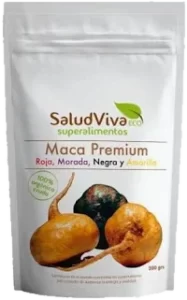
Organic red maca powder 200g is the pink-skinned variant of Lepidium meyenii, grown by smallholder farmers on the plateau of Junín and gelatinized so it mixes easily into drinks. Red is the sweetest of the three maca colors, with a malty, caramel taste that needs very little help from other flavors.
What is red maca?
Maca grows in three natural color types in the same field, yellow, red and black, and they’re sorted by hand after harvest. Red is the middle share, roughly 25% of a crop, between yellow’s abundance and black’s scarcity.
The color isn’t only cosmetic. Each variant has a slightly different mix of glucosinolates and macamides, the compounds that give maca its character, and Andean growers have always sorted and sold them separately. Red is the sweetest of the three.
What makes this red maca different
Junín origin, smallholder sourced
Junín is maca’s historic growing region, the plateau above 4,000 meters where the crop has been grown for centuries. According to the producer, the root is bought from small farmers organized in a producer association rather than through bulk consolidators.
Organic and gelatinized together
Certified at the field, cooked before milling. Organic sourcing and a smooth-mixing powder in the same product, a combination that’s less common in red maca than in yellow.
The easiest maca to drink every day
Gelatinization partly breaks down the starch, so the powder mixes smoothly instead of clumping. Red maca is also the sweetest of the three colors, so it needs the least masking.
Taste profile
The sweetest and most approachable of the three maca colors: malty with a clear caramel note and very little bitterness. It works in plain milk, yogurt or a fruit smoothie without anything else to carry it.
How to use it
Daily serving
5 g (1 tablespoon) a day, usually in the morning. Start with 3 g for the first week. 200 g gives about 40 servings.
Ways to use it
| Use | How |
|---|---|
| Warm milk | 5 g stirred in: the traditional Peruvian way |
| Smoothies | With banana, berries or mango |
| Yogurt | Folded into a bowl |
| Oats | Stirred in off the heat |
| Juice | Shaken into orange juice |
| Baking | Cookies, muffins, no-bake snack balls |
Where it comes from
Junín, central Peruvian Andes. Grown by smallholder farmers in a Peruvian producer network, harvested by hand and sun-dried in the open air on the plateau before gelatinizing and milling. Junín is the reference origin for maca, the region the rest of the market is measured against.
Who it’s for
A good fit if you prefer the sweetest-tasting maca, use it in milk, yogurt or smoothies, or want certified organic with a documented origin.
Look elsewhere if you want a stronger, more roasted taste (black maca) or the mildest one (yellow maca). If you’re pregnant, breastfeeding or have a thyroid condition, talk to your doctor before taking maca.
Nutrition
Reference values for gelatinized red maca powder, per 100 g. The label on the pack may differ slightly.
| Energy | About 330 kcal |
|---|---|
| Protein | 15 g |
| Carbohydrate | 68 g |
| of which fiber | 8 g |
| Fat | 1.2 g |
| Calcium | 250 mg |
| Iron | 15 mg |
| Potassium | 2,000 mg |
Specifications
| Botanical name | Lepidium meyenii |
|---|---|
| Variety | Red maca |
| Share of a typical harvest | About 25% |
| Origin | Junín, Peru |
| Processing | Gelatinized |
| Certification | Organic |
| Net weight | 200 g / 7 oz |
| Servings | About 40 × 5 g |
The three maca colors compared
| Red maca | Yellow maca | Black maca | |
|---|---|---|---|
| Share of harvest | About 25% | About 60% | Under 15% |
| Flavor | Sweetest | Mildest | Strongest, most roasted |
| Best for | Smoothies, yogurt | Everyday use, milk, oats | Coffee, cacao drinks |
| Price | Middle | Lowest | Highest |
Storage
Keep it sealed, cool and dry, out of direct sunlight, at 18–25 °C (64–77 °F). Gelatinized maca absorbs moisture from the air, so keep the pack closed.
Questions
How is red maca used?
Mostly in drinks and breakfasts: warm milk, smoothies, yogurt, oats and juice, plus cookies and muffins. Because it’s the sweetest of the three colors, it works on its own without other flavors to carry it.
What’s the difference between red and black maca?
They’re color variants of the same root. Red is the sweetest-tasting of the three; black has the strongest, most roasted flavor. Red makes up about 25% of a harvest, black under 15%.
Can I mix red maca with yellow or black?
Yes. Blends of all three colors are sold in Peru, and mixing them yourself is perfectly reasonable. Keep the total to the 5 g serving.
Is red maca stronger than yellow?
Different, not stronger. Red is sweeter, while yellow is the mildest, all-purpose color. Both are the same species and the same root.
How much red maca should I take?
5 g, one tablespoon, a day is standard. Start at 3 g for the first week if maca is new to you.
How long does a 200 g pack last?
About 40 days at 5 g a day, or about 66 days at 3 g.
Does gelatinizing change the color?
Slightly. Gelatinized red maca is a deeper reddish tan than the raw powder, because the cooking step caramelizes some of the root’s natural sugars.