The short answer
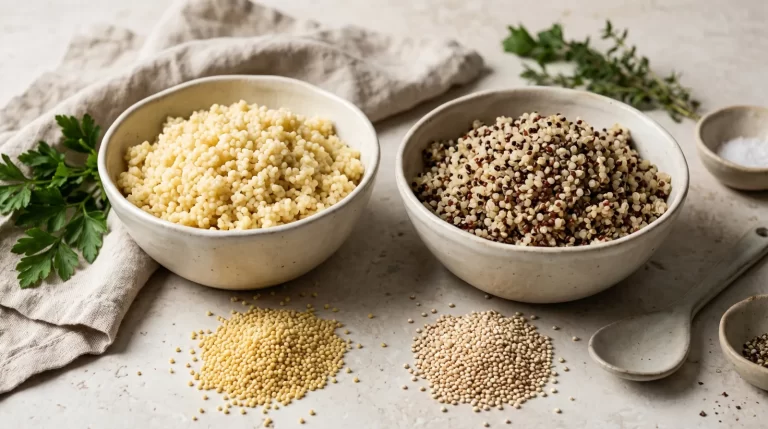
The best substitute for quinoa depends on the dish. Millet is the easiest gluten-free swap: 2 cups of water per cup and about 20 minutes. Amaranth (kiwicha) is the closest match in nutrition, though it cooks softer. Bulgur and couscous are quick and suit salads, but both are wheat and contain gluten.
Quinoa substitutes at a glance
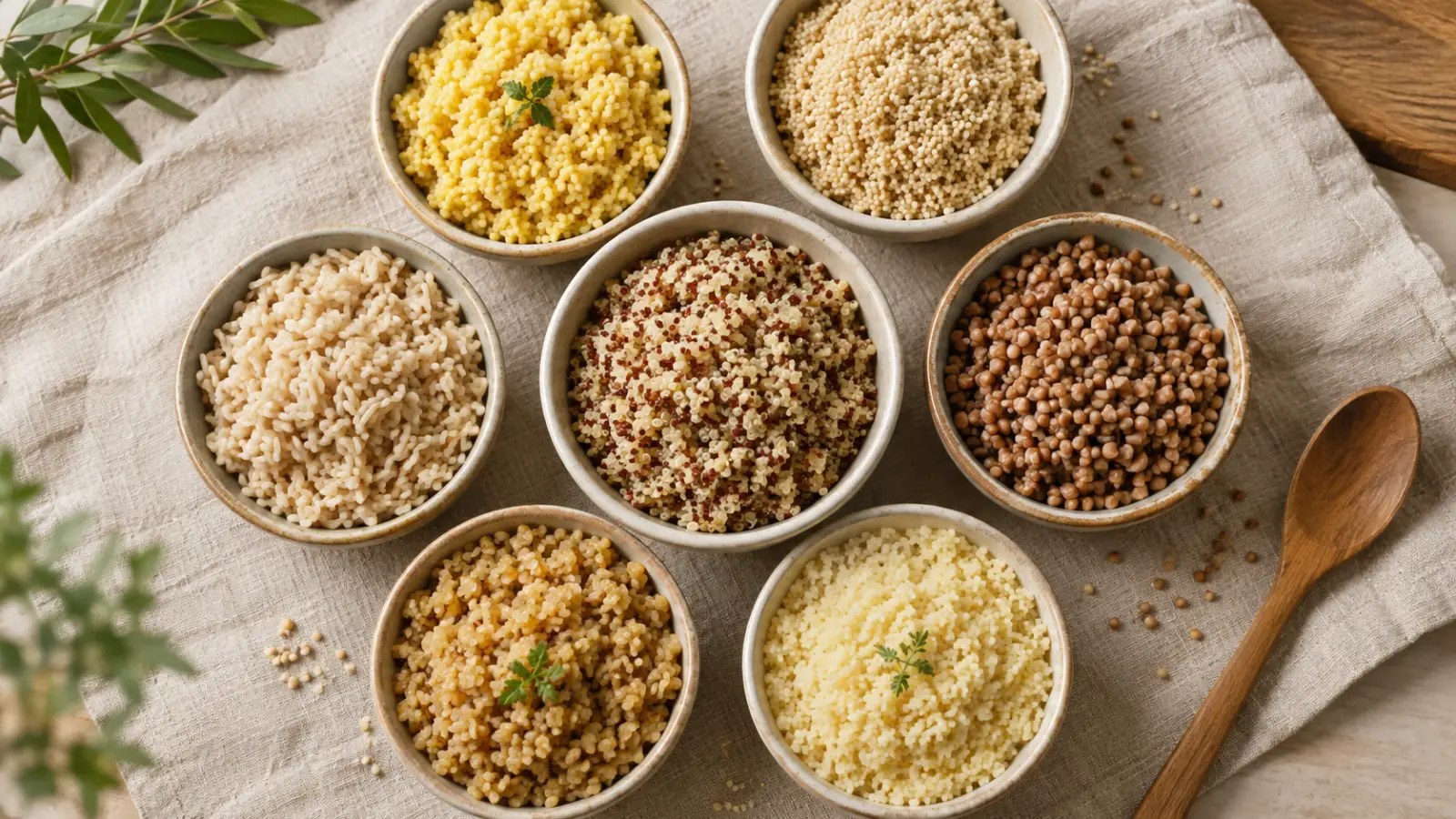
The table compares 10 alternatives to quinoa, with quinoa on the first row for reference. Nutrition is per cup of the cooked food.
| Substitute | Water per 1 cup dry | Cook time | Gluten-free? | Protein / fiber per cup | Best for |
|---|---|---|---|---|---|
| Quinoa (reference) | 2 cups | 12 min, plus 5–10 min resting | Yes | 8.1 g / 5.2 g | — |
| Millet | 2 cups | 20 min | Yes | 6.1 g / 2.3 g | Pilafs, salads, gluten-free sides |
| Amaranth (kiwicha) | 2–3 cups | 25–30 min (sources vary) | Yes | 9.3 g / 5.2 g | Porridge, soups, creamy sides |
| Bulgur | 2 cups | 12 min | No (wheat) | 5.6 g / 8.2 g | Tabbouleh, grain salads, pilaf |
| Couscous | 2 cups for whole-wheat; for regular, follow the pack | About 10 min off the heat | No (wheat) | 6.0 g / 2.2 g (regular) | Quick sides and salads |
| Brown rice | 2¼ cups | 35–40 min, plus 5–10 min resting | Yes | 5.5 g / 3.2 g | Bowls, stir-fries |
| White rice | Follow the pack | Follow the pack | Yes | 4.3 g / 0.6 g | Plain sides |
| Buckwheat (kasha) | 1½–2 cups | 10–15 min | Yes, if the label shows no wheat | 5.7 g / 4.5 g | Warm salads, porridge |
| Pearl barley | 3 cups | 45–60 min | No | 3.5 g / 6.0 g | Soups, stews |
| Cauliflower rice | None | A few minutes in a pan | Yes | 2.1 g / 2.1 g (raw, chopped) | Low-carb bowls |
| Chickpeas | Use cooked or canned | Ready to use | Yes | 14.5 g / 12.5 g | High-protein salads |
Sources: water and times from Oregon State University Extension (Food Hero); nutrition from USDA FoodData Central, calculated per USDA cup weight; gluten from NIDDK and the University of Arizona. Full links below.
10 best substitutes for quinoa
Before you pick an alternative to quinoa, think about what it’s doing in the recipe. Quinoa gives you separate, fluffy grains in about 12 minutes, no gluten, and about 8 g of protein per cooked cup (here’s what’s in a cup of cooked quinoa). Match the job, not just the look.
1. Millet
Millet is the most practical quinoa substitute for gluten-free cooking. Oregon State University Extension cooks it like quinoa: 1 cup with 2 cups of water, simmered for 20 minutes, for about 3 cups. A cooked cup has about 6.1 g of protein and 2.3 g of fiber, a little less than quinoa (USDA). See millet vs quinoa for the full comparison.
2. Amaranth (kiwicha)
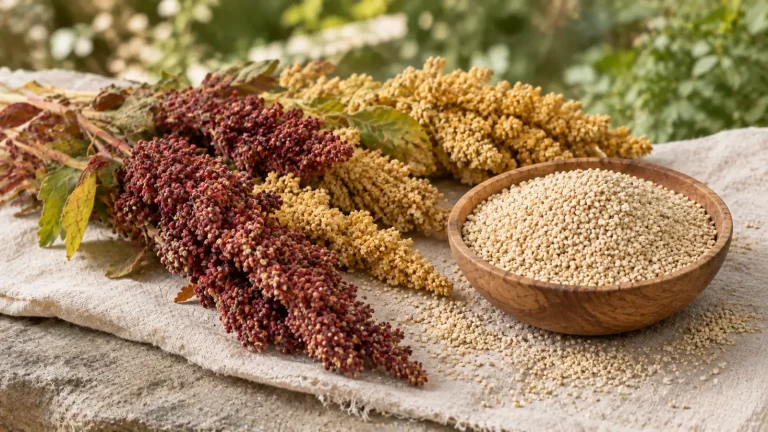
Amaranth, called kiwicha in Peru, is a gluten-free seed eaten as a grain, like quinoa. Per cooked cup, USDA lists about 9.3 g of protein, 5.2 g of fiber and 5.2 mg of iron (FDC 170683), partly because a cup of cooked amaranth weighs more than a cup of quinoa. The texture is the catch. Amaranth turns creamy and a little sticky, so it suits porridge, soups and soft sides better than a cold salad. Oregon State gives 2–3 cups of water and 25–30 minutes; the University of Arizona gives 3 cups and 15–20 minutes. In Peru it grows between about 1,500 and 3,300 m, mainly in Cusco, Ayacucho, Arequipa and Áncash, according to INIA. Peruvians also grind it into kiwicha flour.
3. Bulgur
Bulgur cooks on the same schedule as quinoa: 2 cups of water per cup, about 12 minutes, about 3 cups cooked. It’s wheat, so it contains gluten. It has fewer calories than quinoa and more fiber, about 8.2 g per cup (USDA), and it’s the classic choice for tabbouleh. We cover the details in bulgur and quinoa compared side by side.
4. Couscous
Couscous is the fastest sub for quinoa. Whole-wheat couscous takes 2 cups of water per cup and sits off the heat for about 10 minutes, according to Oregon State. It’s tiny pasta made from wheat, so it isn’t gluten-free; for gluten-free cooking, use millet instead. A cooked cup of regular couscous has about 6.0 g of protein but only 2.2 g of fiber (USDA). USDA has no entry for cooked whole-wheat couscous.
5. Brown rice
Brown rice is the substitute you’re most likely to have already. Oregon State uses 2¼ cups of water per cup, 35–40 minutes and 5–10 minutes of rest. Per cooked cup it has about 248 calories, 5.5 g of protein and 3.2 g of fiber (USDA).
6. White rice
White rice is the most neutral swap. Cook it as the pack says; water and time vary by type. It’s gluten-free but has the least fiber in this list, about 0.6 g per cooked cup, with 4.3 g of protein (USDA).
7. Buckwheat (kasha)
Despite the name, buckwheat isn’t wheat. Buckwheat groats cook in 10–15 minutes with 1½–2 cups of water (Oregon State); roasted groats are sold as kasha and taste toasty and earthy. A cooked cup has about 5.7 g of protein and 4.5 g of fiber (USDA). Buckwheat noodles and mixes can contain wheat, so the University of Arizona’s celiac guide says to check the label.
8. Pearl barley
Barley is chewy and hearty, best in soups and stews. Oregon State’s stovetop barley uses 3 cups of water per cup of pearl barley and 45–60 minutes. It has about 6 g of fiber per cooked cup (USDA). Barley contains gluten.
9. Cauliflower rice
For a low-carb swap, no grain comes close to cauliflower. A cup of raw, chopped cauliflower has about 27 calories and 5.3 g of carbohydrate (USDA), against about 39 g in a cup of cooked quinoa. Pulse it into rice-sized bits and cook it for a few minutes in a hot pan.
10. Chickpeas
When the point of the quinoa was protein, beans do the job better than any grain. A cup of cooked chickpeas has about 14.5 g of protein and 12.5 g of fiber (USDA).
How to replace quinoa in a recipe
- Cooked for cooked: in salads, bowls and sides, swap cup for cup.
- Dry for dry: to substitute quinoa before cooking, change the water and time to match the new grain (see the table).
- Cold salads: pick a grain that stays separate, like millet, bulgur or rice. Amaranth gets sticky.
Gluten-free quinoa substitutes
Gluten is in wheat and its relatives, barley, rye and triticale, according to the NIDDK, so bulgur, couscous and barley are out. The University of Arizona’s celiac guide lists millet, amaranth, teff, quinoa and all rice, wild rice included, as allowed, and warns about shared bulk-bin scoops and products made alongside wheat. Teff takes 1½ cups of water per cup, 8–10 minutes and 5 minutes’ rest (Oregon State). Oats are fine only when certified gluten-free, since cross-contact with wheat is common.
What to use instead of quinoa flour in baking
A recipe that calls for quinoa flour needs another flour, not a cooked grain. Gluten-free options include amaranth (kiwicha) flour, brown rice flour, pure buckwheat flour and certified gluten-free oat flour. The NIDDK lists amaranth, rice and buckwheat flours among those that are safe on a gluten-free diet. Each one behaves differently in a batter, so expect some change in texture. Amounts and blends are in our guide to quinoa flour substitutes.
Frequently asked questions
What grain is closest to quinoa?
It depends on what you mean by close. In nutrition, amaranth (kiwicha) is nearest: also a gluten-free seed, with similar protein and the same fiber per cooked cup. In looks, millet is closest, with small round grains. In cooking time and texture, bulgur is closest, at 12 minutes with 2 cups of water, but it’s wheat.
Can I replace quinoa with rice one for one?
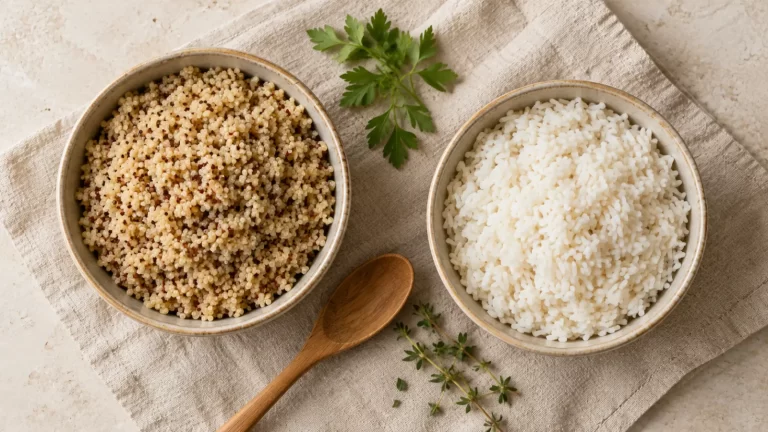
Yes, cooked rice can replace cooked quinoa cup for cup. Just cook the rice the way rice needs: brown rice takes 2¼ cups of water and 35–40 minutes. You’ll lose some protein and fiber: per cooked cup, brown rice has about 5.5 g and 3.2 g, against 8.1 g and 5.2 g for quinoa (USDA).
Can I substitute quinoa for couscous?
Yes. Quinoa works in most couscous dishes, from salads to tagine sides, and it makes them gluten-free. Use 2 cups of liquid per cup of quinoa and simmer it for 12 minutes, then let it rest for 5 to 10, instead of just soaking it off the heat. Rinse it first unless the pack says it’s pre-rinsed.
Which quinoa substitute has the most protein?
Among the grains here, amaranth has the most, about 9.3 g per cooked cup. Millet and regular couscous have about 6 g. If protein is the main goal, chickpeas beat every grain, with about 14.5 g per cooked cup (USDA).
Shop Peruvian quinoa flour
We sell quinoa and kiwicha as flours, bought in Peru and shipped from Lima. If you need them gluten-free, check what the pack says.

Sources
- Oregon State University Extension Service, Food Hero, 2022. Cook whole grains on the stovetop; and Stovetop barley.
- USDA Agricultural Research Service, 2019. Quinoa, cooked (FDC 168917); millet (168871), amaranth (170683), bulgur (170287), couscous (169700), brown rice (169704), white rice (168878), buckwheat groats (170686), pearl barley (170285), chickpeas (173757), all cooked; cauliflower, raw (169986). FoodData Central, SR Legacy.
- National Institute of Diabetes and Digestive and Kidney Diseases (NIH), 2020. Eating, diet, and nutrition for celiac disease.
- University of Arizona Campus Health, 2014. Celiac disease and your gluten free diet; and Whole grain preparation chart.
- Pérez Ávila A, 2010. Cultivo de kiwicha en la sierra central. INIA, Estación Experimental Agraria Santa Ana, Huancayo.