The short answer
Kiwicha benefits are mainly nutritional. Kiwicha is Peruvian amaranth (Amaranthus caudatus), a gluten-free seed with about 12 to 14 g of protein per 100 g, plus iron, magnesium and fiber. Two trials in young children gave mixed results on anemia, and claims about cholesterol or blood sugar rest mostly on animal studies.
What is kiwicha? Peru’s amaranth
Kiwicha is the Peruvian name for Amaranthus caudatus, one of the amaranths grown for their tiny seeds. In English it’s simply sold as amaranth, but not every amaranth is kiwicha: other grain species, such as A. cruentus and A. hypochondriacus, are sold under the same name. That matters when you read the research, because many studies don’t say which species they used.
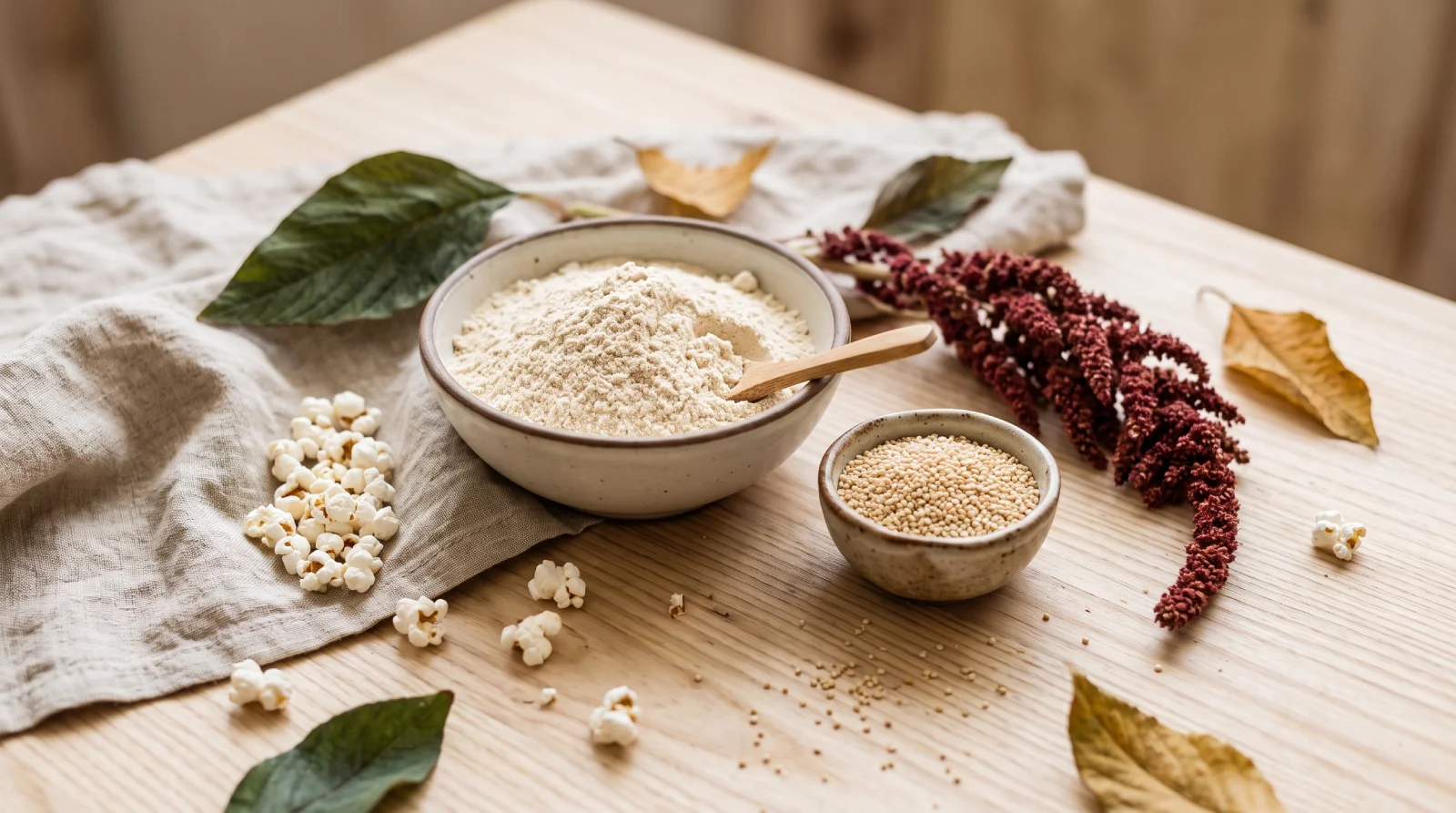
In Peru it’s eaten as cooked grain, popped, in flakes and as flour, though it isn’t always easy to find: among Lima’s big supermarket chains, only plazaVea and Tottus stocked kiwicha flour when we checked. Our kiwicha (amaranth) flour page covers where it grows and how it tastes.
Kiwicha benefits at a glance: what the evidence shows
Each common claim, next to the kind of study behind it:
| Claim | What was studied | In whom | Result | Verdict |
|---|---|---|---|---|
| Protein, iron, magnesium, fiber | Nutrient analysis of grain and flour | Food composition tables | 12 to 14 g protein, 5 to 8 mg iron, 7 to 9 g fiber per 100 g | Established |
| Gluten-free | Grain composition | Not applicable | No gluten | Established; check the label for cross-contact |
| Less anemia | Amaranth and chickpea bread, processed to cut phytate, 6 months | 100 anemic children aged 2 to 5, Ethiopia | Anemia 32% vs 56% with maize bread | One positive trial |
| Less anemia | Porridge made with 70% amaranth grain, 16 weeks | 279 children aged 12 to 59 months, Kenya | No better hemoglobin or iron status | One trial with no effect |
| Lower cholesterol | Leaf extracts (rats); amaranth oil (adults) | Rats; 44 adults with overweight or obesity | Lower in rats; total and LDL cholesterol rose with the oil | Not shown in people |
| Lower blood sugar | Leaf extracts | Diabetic rats | Lower glucose | Not shown in people |
| Weight loss, skin, benefits “for women” or “for men” | Nothing | None | No studies | Unproven |
Sources: Peruvian food composition tables (INS 2017); USDA FoodData Central; Orsango et al. 2020; Macharia-Mutie et al. 2012; Duś-Żuchowska et al. 2019; review by Baraniak and Kania-Dobrowolska 2022.
Kiwicha nutrition: what’s in the flour
Peru’s official food tables list kiwicha flour on its own, the closest match to what you buy. USDA has figures for raw amaranth grain.
| Nutrient | Kiwicha flour (Peru, INS) | Amaranth grain, raw (USDA) | 30 g of kiwicha flour |
|---|---|---|---|
| Calories | 352 kcal | 371 kcal | About 106 kcal |
| Protein | 12.2 g | 13.6 g | 3.7 g |
| Fat | 7.9 g | 7.0 g | 2.4 g |
| Carbohydrates | 66.4 g | 65.2 g | 19.9 g |
| Fiber | 8.4 g | 6.7 g | 2.5 g |
| Iron | 5.3 mg | 7.6 mg | 1.6 mg |
| Calcium | 214 mg | 159 mg | 64 mg |
| Phosphorus | 360 mg | 557 mg | 108 mg |
| Magnesium | Not listed | 248 mg | Not listed |
| Zinc | 3.8 mg | 2.9 mg | 1.1 mg |
| Potassium | 663 mg | 508 mg | 199 mg |
Sources: Tablas peruanas de composición de alimentos (INS, 2017), code A 97; USDA FDC 170682. The 30 g column is our calculation from the INS figures, for illustration, not a recommended amount.
Protein and lysine
Grain proteins such as wheat are low in lysine, an essential amino acid. Amaranth isn’t. By our math from USDA data, amaranth protein has about 5.5 g of lysine per 100 g of protein, against about 2.2 g in white wheat flour. A 2022 review notes that it contains all the essential amino acids.
Iron: what the trials in children found
Amaranth is rich in iron for a plant food, but the grain also contains phytate, a natural compound that both trials below treated as the main barrier to absorbing that iron. The two trials tested amaranth grain against anemia in young children, and they disagree.
- Ethiopia, 2020. In a cluster-randomized trial in 100 anemic children aged 2 to 5, one group ate 150 g a day of bread made from 70% amaranth and 30% chickpea for six months. The amaranth was soaked, sprouted and fermented at home to lower its phytate. The other group ate maize bread. At the end, 32% of the amaranth group were still anemic, against 56% of the maize group, and the amaranth group’s hemoglobin was 8.9 g/L higher. Iron deficiency itself didn’t differ.
- Kenya, 2012. In a 16-week randomized trial in 279 children aged 12 to 59 months, 38% of them anemic at the start, porridge made with 70% amaranth grain, providing 23 mg of iron per meal, didn’t improve hemoglobin or iron status. The researchers thought phytate was the likely reason. In the same trial, a micronutrient powder added to porridge did help.
So processing may matter as much as the grain, and the anemia evidence only covers young children in Ethiopia and Kenya. Neither study names kiwicha; both describe amaranth grain. If you’re low in iron, kiwicha can be part of your diet, but it doesn’t replace treatment from your doctor.
Is kiwicha gluten-free?
Yes. Amaranth flour contains no gluten, according to the 2022 review, which is why it shows up in gluten-free baking. If you have celiac disease, choose a pack labeled gluten-free, because flour can pick up wheat in mills that handle other grains.
Cholesterol and blood sugar: animal studies vs people
These claims come mostly from animals. The 2022 review describes diabetic rats given extracts of amaranth leaves, kiwicha among them, for 21 days; their blood sugar and cholesterol fell. Those were leaf extracts, not the seeds or flour you eat.
The only trial in people on cholesterol that we found used amaranth oil, not the grain. In a randomized, double-blind crossover trial in 44 adults with overweight or obesity, 20 ml a day of amaranth oil for three weeks raised total and LDL cholesterol compared with rapeseed oil. Total cholesterol went up about 6 mg/dL on amaranth oil and down about 8 mg/dL on rapeseed oil, and LDL moved the same way. The oil came from A. cruentus, not kiwicha. It hasn’t been shown in people that kiwicha, or any amaranth grain, lowers cholesterol or blood sugar.
Kiwicha vs quinoa: which is healthier?
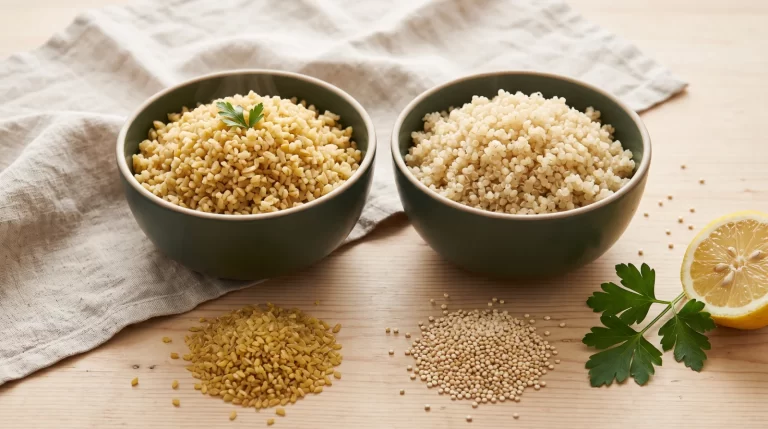
They’re close relatives in the kitchen and close in nutrition. Calories, protein and fiber are nearly the same. Amaranth has more iron, calcium, magnesium and manganese; quinoa has much more folate.
| Nutrient | Amaranth, raw (100 g) | Quinoa, raw (100 g) | Amaranth, cooked (1 cup, 246 g) | Quinoa, cooked (1 cup, 185 g) |
|---|---|---|---|---|
| Calories | 371 | 368 | 251 | 222 |
| Protein | 13.6 g | 14.1 g | 9.3 g | 8.1 g |
| Fiber | 6.7 g | 7.0 g | 5.2 g | 5.2 g |
| Iron | 7.6 mg | 4.6 mg | 5.2 mg | 2.8 mg |
| Calcium | 159 mg | 47 mg | 116 mg | 31 mg |
| Magnesium | 248 mg | 197 mg | 160 mg | 118 mg |
| Manganese | 3.3 mg | 2.0 mg | 2.1 mg | 1.2 mg |
| Folate | 82 µg | 184 µg | 54 µg | 78 µg |
Source: USDA FoodData Central, FDC 170682, 168874, 170683 and 168917. Cup values are our calculation from USDA cup weights, rounded.
Neither is healthier overall: pick kiwicha for minerals, quinoa for folate, or use both. A cup of cooked amaranth also weighs more, which explains part of its higher numbers per cup. For the full quinoa breakdown, see quinoa nutrition per 100 g, or visit our quinoa flour page.
Who should be careful with amaranth?
Amaranth is eaten as an ordinary food in Peru, and the 2022 review doesn’t flag any group that should avoid it. It does note that the seeds and leaves contain small amounts of oxalates, nitrates, phytate and saponins, without giving figures. If your doctor has asked you to limit oxalates, ask about amaranth too, and skip it if it has ever given you a reaction.
If you’re pregnant or breastfeeding, take regular medicine or have a chronic condition, there’s no specific safety research on kiwicha beyond normal food use, so check with your doctor before eating it in large amounts. Amaranth oil supplements are a separate product, and in the trial above they raised LDL cholesterol.
How to eat kiwicha
Use the flour for part of the flour in pancakes, flatbreads and cookies, cook the seeds into a porridge, or add the popped seeds to bars and yogurt. In Peru it’s also mixed with milk or made into sweets. For ideas, try these easy kiwicha recipes.
Frequently asked questions
Are there kiwicha benefits for women or for men?
No study has looked at kiwicha separately in women or men. The nutrients are the same for everyone, and so is the evidence: the two amaranth-grain trials on anemia were in young children, with mixed results. Claims about hormones, fertility or muscle for either sex have no research behind them.
Is kiwicha good for your skin?
There are no studies on kiwicha and skin, in people or in animals. Claims about glowing skin usually point to its protein, zinc or antioxidants, but nobody has tested whether eating kiwicha changes your skin. Until someone does, treat skin promises on a kiwicha product as marketing.
Is kiwicha a complete protein?
It contains all the essential amino acids, and its protein has more than twice the lysine of wheat protein, by our math from USDA data, which makes it a good partner for other grains. With about 12 to 14 g of protein per 100 g, it adds protein to a mixed diet but isn’t a concentrated protein source.
What is the healthiest Peruvian food?
There isn’t a single one. Peruvian staples like kiwicha, quinoa, beans, potatoes and fresh fruit each bring different nutrients to the plate. Kiwicha stands out for iron, calcium and magnesium, as the tables above show, while potatoes and beans bring others. No single food covers everything you need.
Shop Peruvian kiwicha flour
We buy kiwicha flour in Peru, read the label, and ship it to you.
- Out of stock
- Out of stock
Sources
- Baraniak J, Kania-Dobrowolska M, 2022. The dual nature of amaranth: functional food and potential medicine. Foods 11(4):618.
- Orsango AZ, Loha E, Lindtjørn B, Engebretsen IMS, 2020. Efficacy of processed amaranth-containing bread compared to maize bread on hemoglobin, anemia and iron deficiency anemia prevalence among two-to-five year-old anemic children in Southern Ethiopia: a cluster randomized controlled trial. PLoS One 15(9):e0239192.
- Macharia-Mutie CW, Moretti D, Van den Briel N, et al., 2012. Maize porridge enriched with a micronutrient powder containing low-dose iron as NaFeEDTA but not amaranth grain flour reduces anemia and iron deficiency in Kenyan preschool children. Journal of Nutrition 142(9):1756–1763.
- Duś-Żuchowska M, Walkowiak J, Morawska A, et al., 2019. Amaranth oil increases total and LDL cholesterol levels without influencing early markers of atherosclerosis in an overweight and obese population: a randomized double-blind cross-over study in comparison with rapeseed oil supplementation. Nutrients 11(12):3069.
- Reyes García MM, Gómez-Sánchez Prieto I, Espinoza Barrientos CM, 2017. Tablas peruanas de composición de alimentos, 10th ed. Instituto Nacional de Salud, Lima.
- USDA Agricultural Research Service, 2019. FoodData Central, SR Legacy: amaranth grain, uncooked (170682); amaranth grain, cooked (170683); quinoa, uncooked (168874); quinoa, cooked (168917); wheat flour, white, all-purpose (169761).