The short answer
Yes, maca and coffee mix well. Stir or froth about a teaspoon of maca powder into a hot cup, ideally with a splash of milk, because the powder doesn’t dissolve the way instant coffee does. Maca adds an earthy, malty note but no caffeine of its own. The caffeine in maca coffee comes from the coffee.
How to make maca coffee
This is a starting point for one mug. Adjust the maca and milk to your taste; the amounts are for flavor, not a dose.
Ingredients
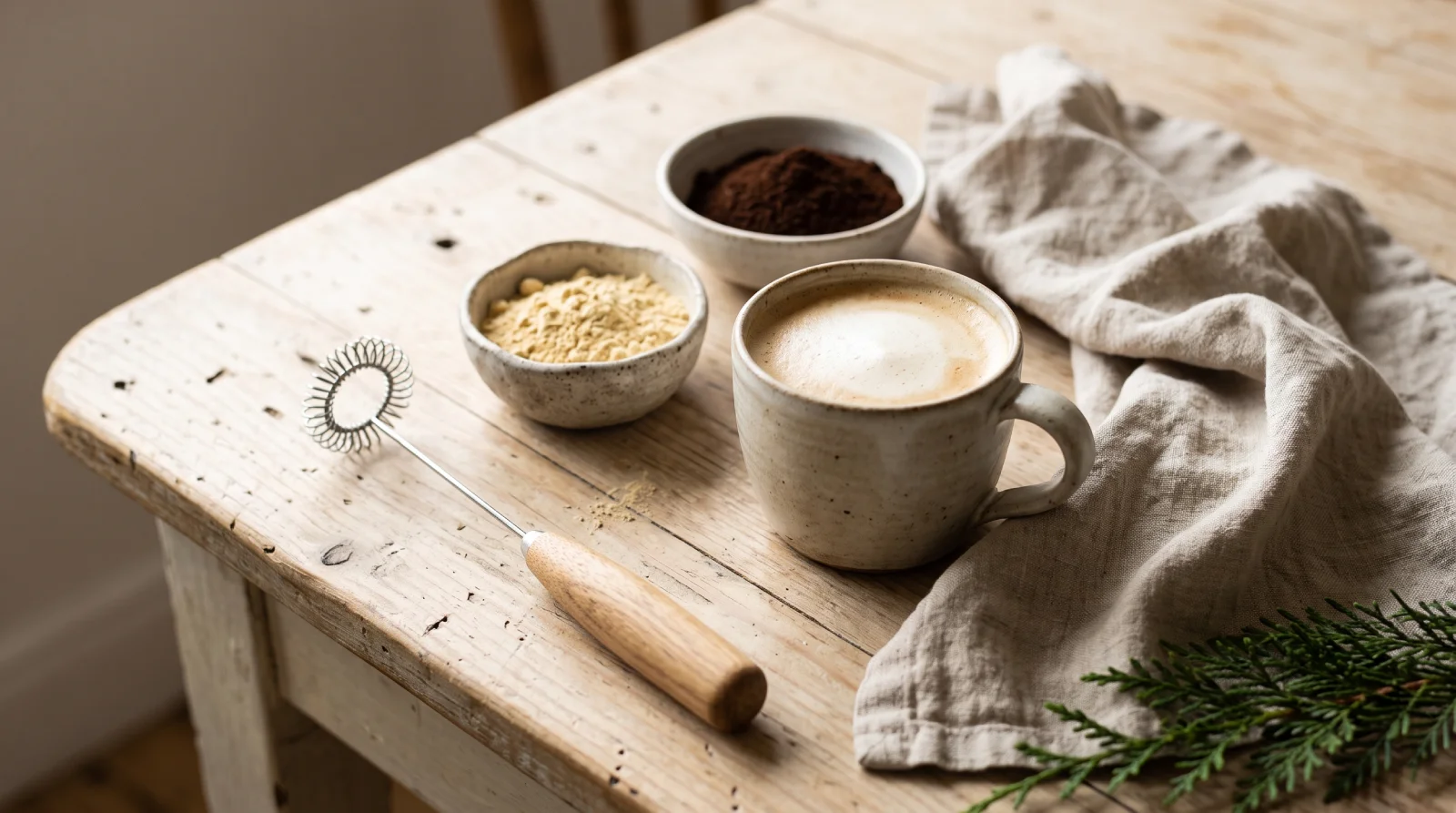
- 1 cup (8 fl oz) of hot brewed coffee, or 1 to 2 teaspoons of instant coffee dissolved in hot water
- ½ to 1 level teaspoon of maca powder (start with ½ if you’re new to the taste)
- 2 to 4 tablespoons of milk or a plant-based milk
- Optional: a pinch of cinnamon, ½ teaspoon of cacao powder, a drop of vanilla, or sweetener to taste
Steps
- Brew your coffee as usual: drip, French press, moka pot or instant. Any coffee works. If you use ground or instant Peruvian coffee, some of the packs we stock name a region, such as Chanchamayo, Cajamarca or Villa Rica.
- Put the maca in your mug and add the milk, or a spoonful of the coffee. Stir into a smooth paste with no dry lumps.
- Pour in the hot coffee slowly, stirring as you go. A small handheld frother for 15 to 20 seconds gives the smoothest cup.
- Taste, then add cinnamon, cacao or sweetener if you like.
- Drink it fairly soon. The powder settles to the bottom if the cup sits, so give it a stir halfway.
Other ways to add maca to coffee
With instant coffee
Instant coffee is the quickest base for coffee with maca powder. Put the instant coffee, the maca and a little milk in a jar or shaker with a lid, add hot water, close it and shake for a few seconds. Pour into a mug.
Iced or blended
Maca mixes best when blended. Blend cold coffee, maca, milk and ice for 20 to 30 seconds. A banana or a few dates make it thicker and sweeter. For a creamier hot version with more milk than coffee, see our maca latte.
Without coffee
Leave out the coffee and whisk maca into hot milk with cinnamon and a little cacao. You’ll also find caffeine-free “herbal coffees” that blend maca with roasted grains or chicory. They taste roasted, but they aren’t coffee.
How to stop maca powder clumping in coffee
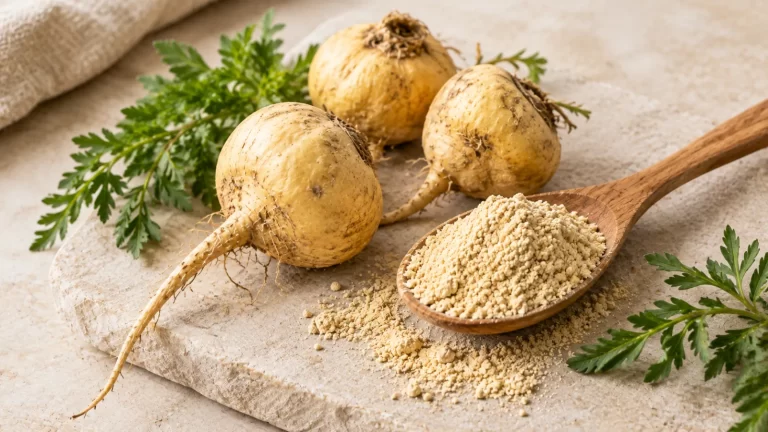
Maca powder is dried, ground root, made up mainly of carbohydrates and protein, according to LiverTox, an NIH database. Instant coffee is a dried coffee extract made to dissolve; maca isn’t. In a cup it behaves more like cocoa powder: it disperses, then settles. A few habits help:
- Make a paste first with a little milk or coffee, then add the rest of the liquid.
- Use a frother, a blender or a jar with a lid instead of a spoon.
- Add the maca to the mug before the coffee, not on top of it.
- Sift it through a small strainer if your powder has formed lumps in the bag.
Raw or gelatinized maca powder in coffee?
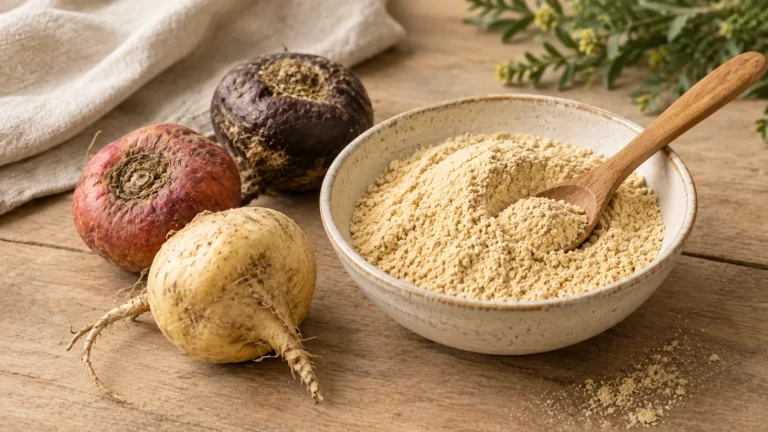
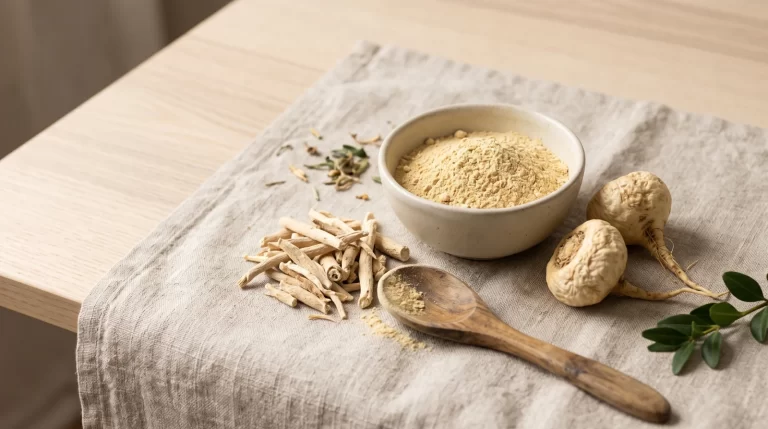
Both work in a hot cup. Raw maca powder is the dried, milled root. Gelatinized maca is made from that powder by a short treatment with heat, pressure and moisture, as a 2024 review of maca describes it. The same review says raw maca may hold about 20% more glucosinolates, a group of plant compounds. The same review describes gelatinized maca as more digestible, as sellers often do, but we found no study comparing how people tolerate the two, and none on how either behaves in coffee.
Cooking maca isn’t new. In Peru, dried maca root is traditionally boiled before it’s eaten (Gonzales 2012). The yellow maca powder we buy in Peru comes raw or gelatinized depending on the pack, so check the label. For more ideas beyond coffee, see other ways to use maca powder.
Maca and coffee: how much caffeine is in your cup?
All of it comes from the coffee. Maca is a root eaten as food, and caffeine doesn’t appear among its listed components in LiverTox. The FDA names coffee, tea and chocolate as the well-known sources. We explain this in more detail in whether maca has any caffeine. Here’s roughly what each base adds:
| Your maca coffee | Serving | Caffeine (about) |
|---|---|---|
| Brewed coffee + maca | 8 fl oz | 95 mg |
| Instant coffee + maca | 6 fl oz | 47 mg |
| Espresso shot + maca and milk | 1 fl oz shot | 63 mg |
| Decaf brewed coffee + maca | 8 fl oz | 2 mg |
| Maca in hot milk, no coffee | 1 cup | None from the maca |
Source: USDA FoodData Central (SR Legacy), caffeine per 100 g multiplied by the USDA serving weight; our rounding.
Real cups vary a lot. The FDA puts a 12 fl oz cup of regular brewed coffee at 113 to 247 mg, and cites 400 mg a day as an amount not generally linked to negative effects in most adults.
What maca adds to coffee, and what it doesn’t
Maca changes the taste and body of the cup: earthy, a little nutty and malty, with a slightly thicker feel. It adds no caffeine, so it won’t make the coffee any stronger.
The benefit claims you’ll read for maca coffee, for men, for women or for weight loss, come from maca research, not from coffee studies. That research is thin. In a 12-week trial in Peru, 175 adults took 3 g a day of red or black maca extract, a concentrated form, and rated their mood and energy better than placebo when they lived near sea level, but not at high altitude. Body mass index didn’t change. LiverTox’s summary is blunt: none of maca’s claimed effects have been proven in rigorous controlled trials in people. We found no study of maca and coffee taken together.
When to drink it and who should be careful
We found no study on the best time of day to take maca. The coffee is what matters for timing: the FDA lists insomnia among the signs of too much caffeine, and people clear it at very different speeds. If coffee keeps you awake, have your maca coffee in the morning, or switch to decaf or plain maca in milk later in the day.
Maca’s side effects are uncommon and mild, mostly stomach upset and headaches, according to LiverTox. Too much caffeine can cause a fast or pounding heartbeat, jitters, anxiety, an upset stomach, nausea and headaches (FDA). If you’re pregnant or breastfeeding, take medication or have a health condition, check with your doctor about both the caffeine and the maca. There isn’t enough safety data on maca supplements in pregnancy.
Frequently asked questions
What should you not mix maca with?
LiverTox doesn’t list any drug interactions for maca, but maca has only been tested in small, short trials, so no listed interactions isn’t proof that there are none. If you take prescription medicine, ask your pharmacist. In a maca coffee, the thing to watch is extra caffeine: don’t stack it with energy drinks or supplements that add caffeine, which the FDA notes can hide in products you might not expect.
Is maca coffee good for belly fat?
There’s no evidence that it is. In the 12-week trial, maca extract didn’t change body mass index. Black coffee itself has almost no calories, about 1 kcal per 100 g in USDA data, so the calories in your cup come mostly from the milk and sugar you add.
Does hot coffee ruin maca?
We found no study on what a cup of hot coffee does to maca. Heat isn’t unusual for maca, though: the dried root is traditionally boiled, and gelatinized maca is heat-treated during processing. Hot coffee is fine to use with either kind.
How much maca can you put in coffee?
For flavor, most people find ½ to 1 level teaspoon per mug is enough. In studies, the amounts are different: LiverTox gives a usual range of 500 to 3,000 mg a day, and the Peru trial used 3 g a day of a concentrated extract. A teaspoon’s weight depends on the powder, so weigh it if you want to know.
Shop Peruvian maca powder
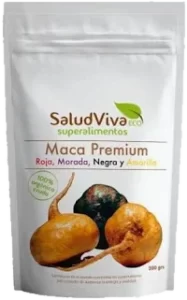
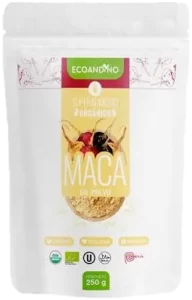
Want to try it in your morning cup? These are the maca powders on our shelf, raw or gelatinized as each pack says.
Sources
- U.S. Department of Agriculture, Agricultural Research Service, 2019. FoodData Central, SR Legacy: Beverages, coffee, brewed (FDC 171890); instant (174130); espresso (171891); decaffeinated (171889). USDA.
- U.S. Food and Drug Administration, 2024. Spilling the Beans: How Much Caffeine is Too Much? FDA Consumer Updates.
- National Institute of Diabetes and Digestive and Kidney Diseases, 2019. Maca. LiverTox: Clinical and Research Information on Drug-Induced Liver Injury.
- Minich DM, Ross K, Frame J, et al., 2024. Not All Maca Is Created Equal: A Review of Colors, Nutrition, Phytochemicals, and Clinical Uses. Nutrients.
- Gonzales GF, 2012. Ethnobiology and Ethnopharmacology of Lepidium meyenii (Maca), a Plant from the Peruvian Highlands. Evidence-Based Complementary and Alternative Medicine.
- Gonzales-Arimborgo C, Yupanqui I, Montero E, et al., 2016. Acceptability, Safety, and Efficacy of Oral Administration of Extracts of Black or Red Maca (Lepidium meyenii) in Adult Human Subjects: A Randomized, Double-Blind, Placebo-Controlled Study. Pharmaceuticals.